Number Puzzles
Eight free number puzzles, one place to play. From the addictive tile-merging of 2048 and the classic constraint logic of Sudoku to the arithmetic challenges of KenKen and Kakuro, every puzzle in this collection is built to develop real mathematical thinking — not just number familiarity. No account needed. Play instantly on any device.
Last Updated: Sep 11, 2026
All Number Puzzles
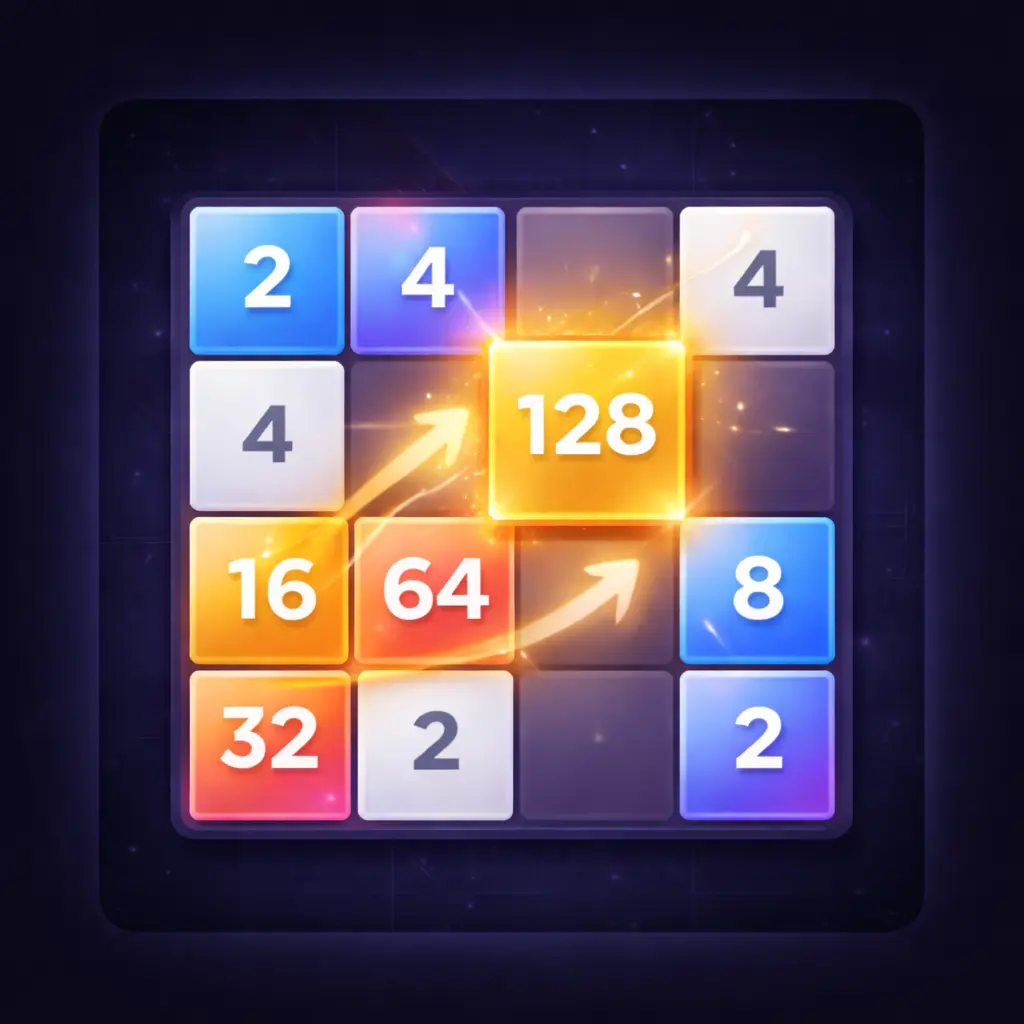
2048
Swipe or use arrow keys to move tiles. When two tiles with the same number touch, they merge into one! Each move adds a new 2 or 4 tile to the board. Your goal is to reach the 2048 tile, but you can keep playing for a high score until the board is full and no moves remain.
Number Sequence
Analyze the sequence of numbers to identify the underlying mathematical pattern. Select the correct number from the options provided to complete the sequence. As you solve puzzles and advance levels, the patterns become more complex, involving addition, multiplication, or multi-step logic.
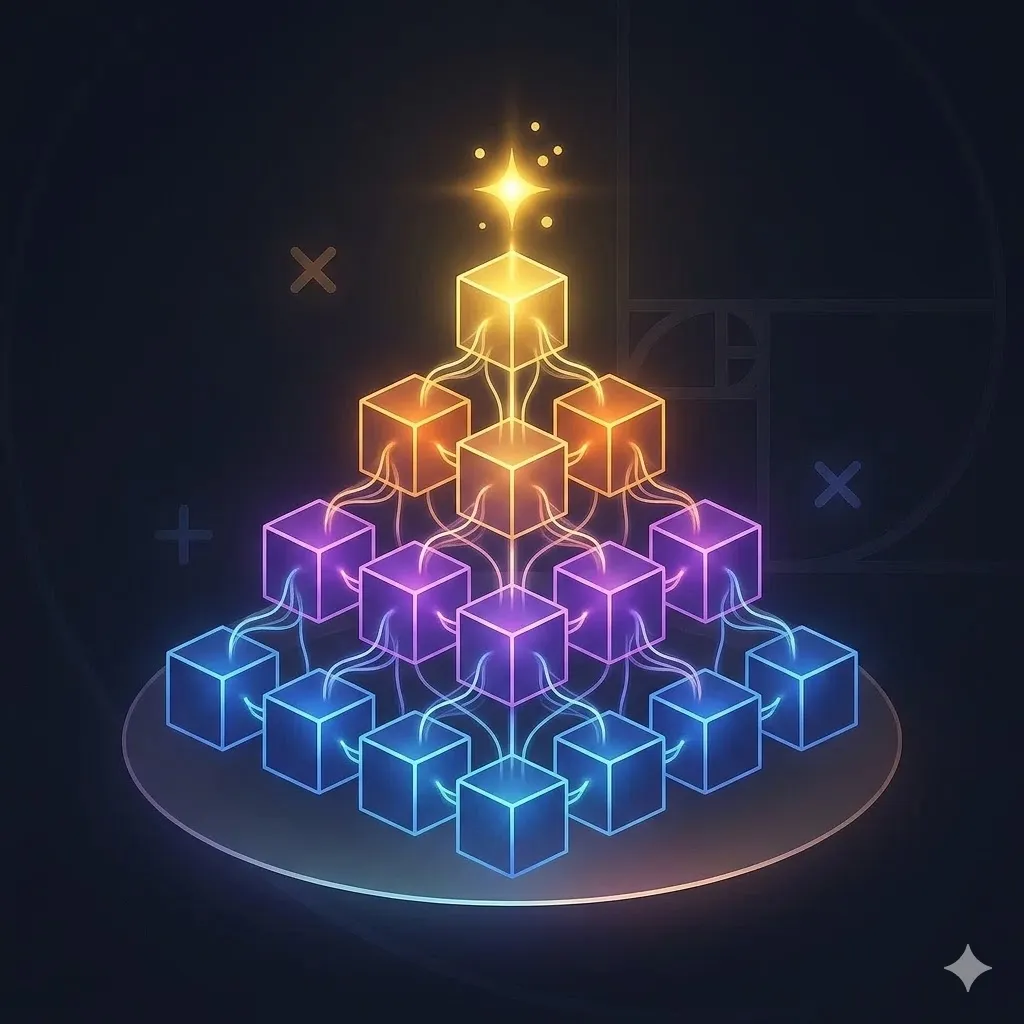
Number Pyramid
Fill in the missing numbers by calculating the sum of the two blocks below each block. Perfect for practicing mental math and logic.
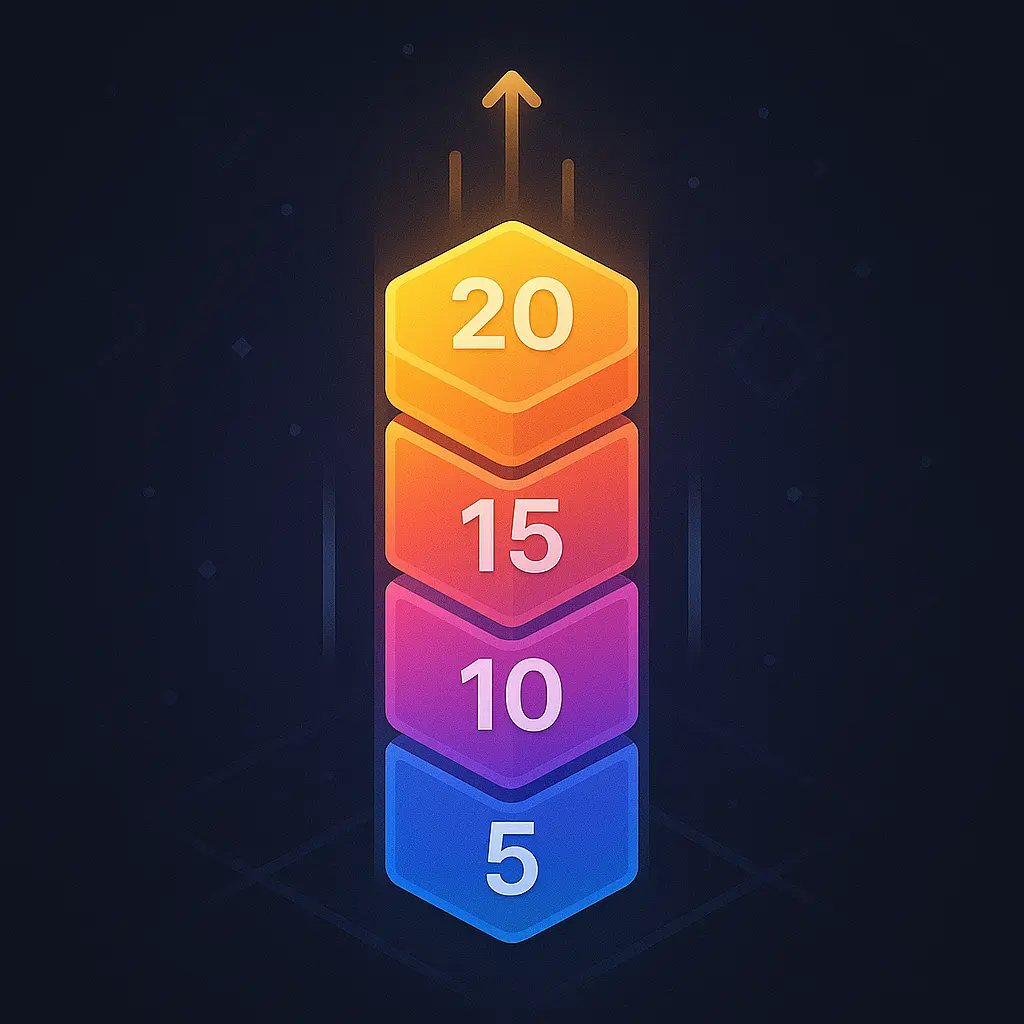
Number Tower
Follow the rule displayed at the top of the screen to select the correct numbers from the grid. Each correct selection builds your tower toward the target height (3 blocks for Easy, 5 for Medium, and 8 for Hard). Correct answers earn points and multipliers, while wrong selections cost 3 seconds of time.
Prime Hunter
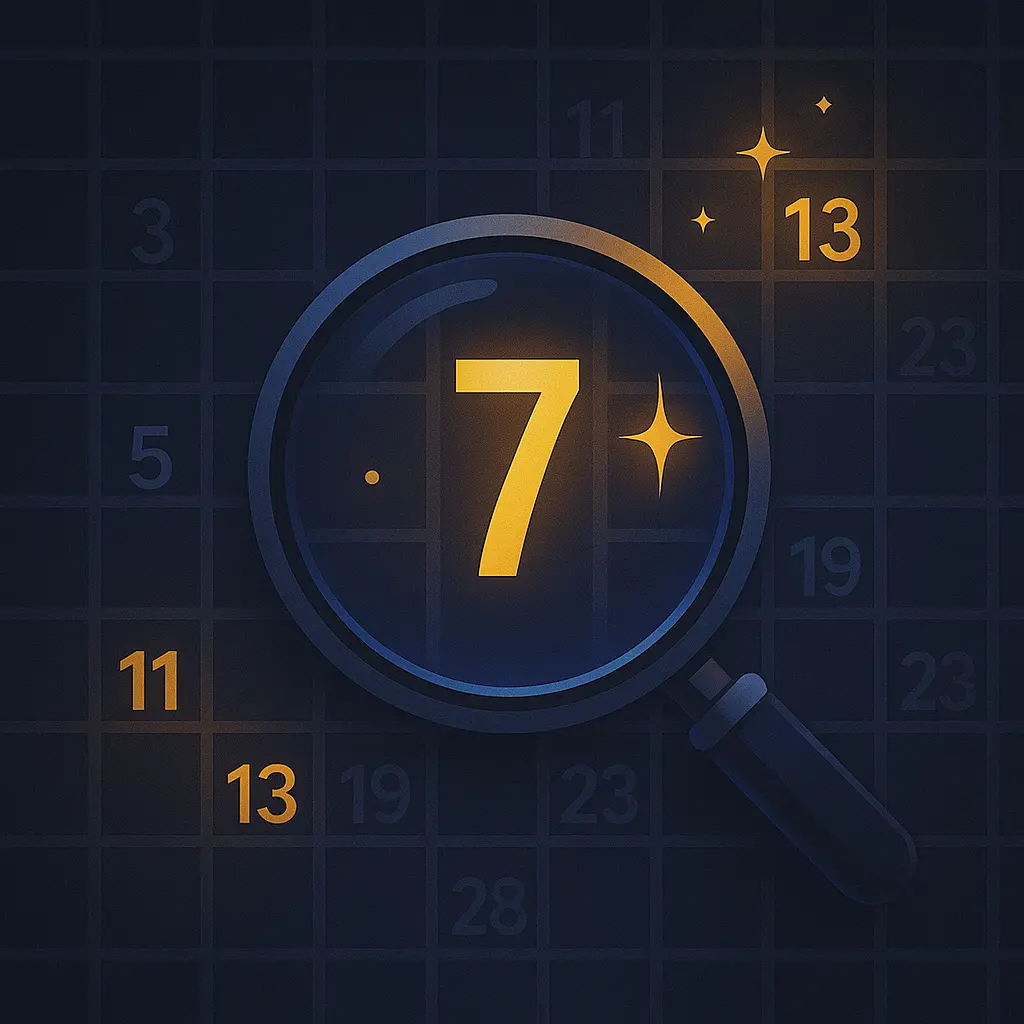
Identify and click on prime numbers—numbers divisible only by 1 and themselves—within the grid. Find all primes before the timer expires to level up. Be careful: clicking a non-prime number reduces your remaining time by 5 seconds. Higher levels feature larger grids and broader number ranges.
Sudoku
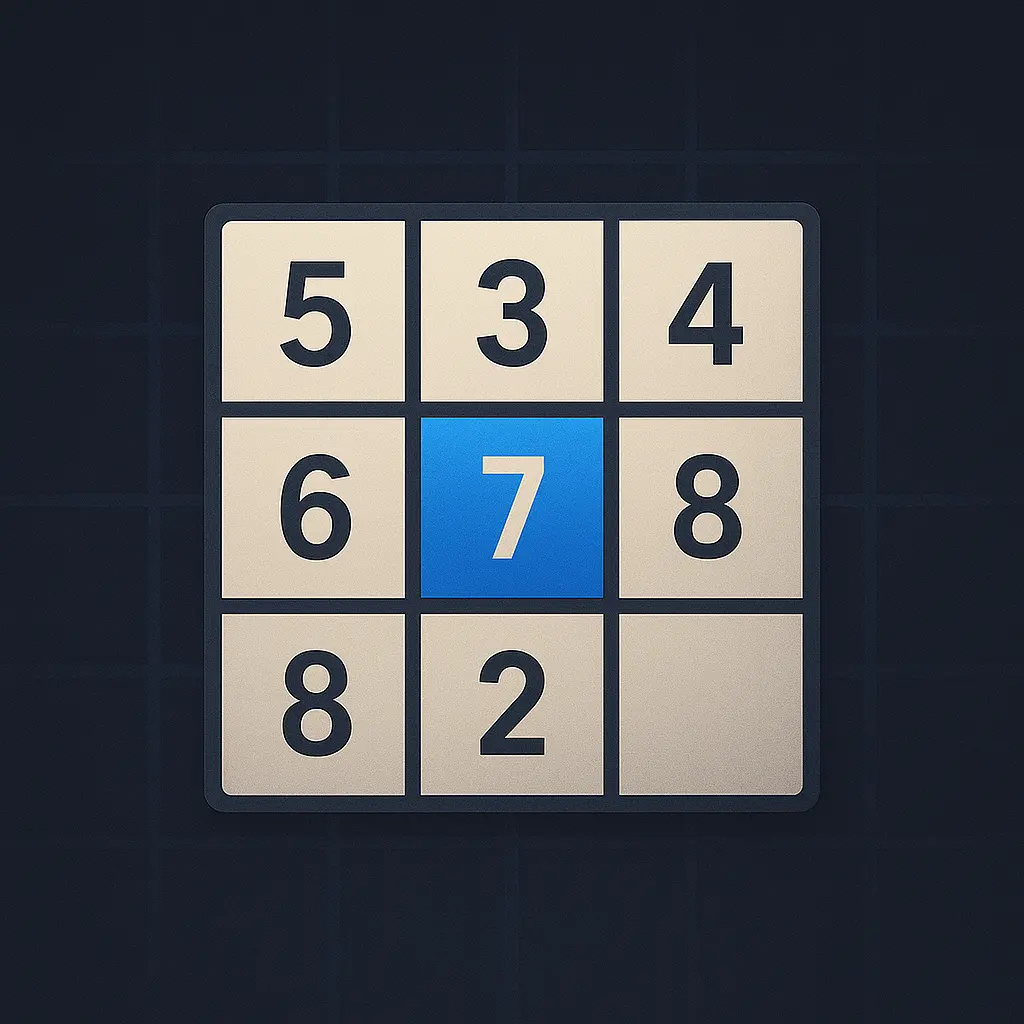
Fill the 9x9 grid so that every row, every column, and every 3x3 internal box contains all digits from 1 to 9 without any repeats. Select a cell and use the number pad to place your guess. Use the Eraser for mistakes and keep an eye on the timer to track your concentration speed.
KenKen
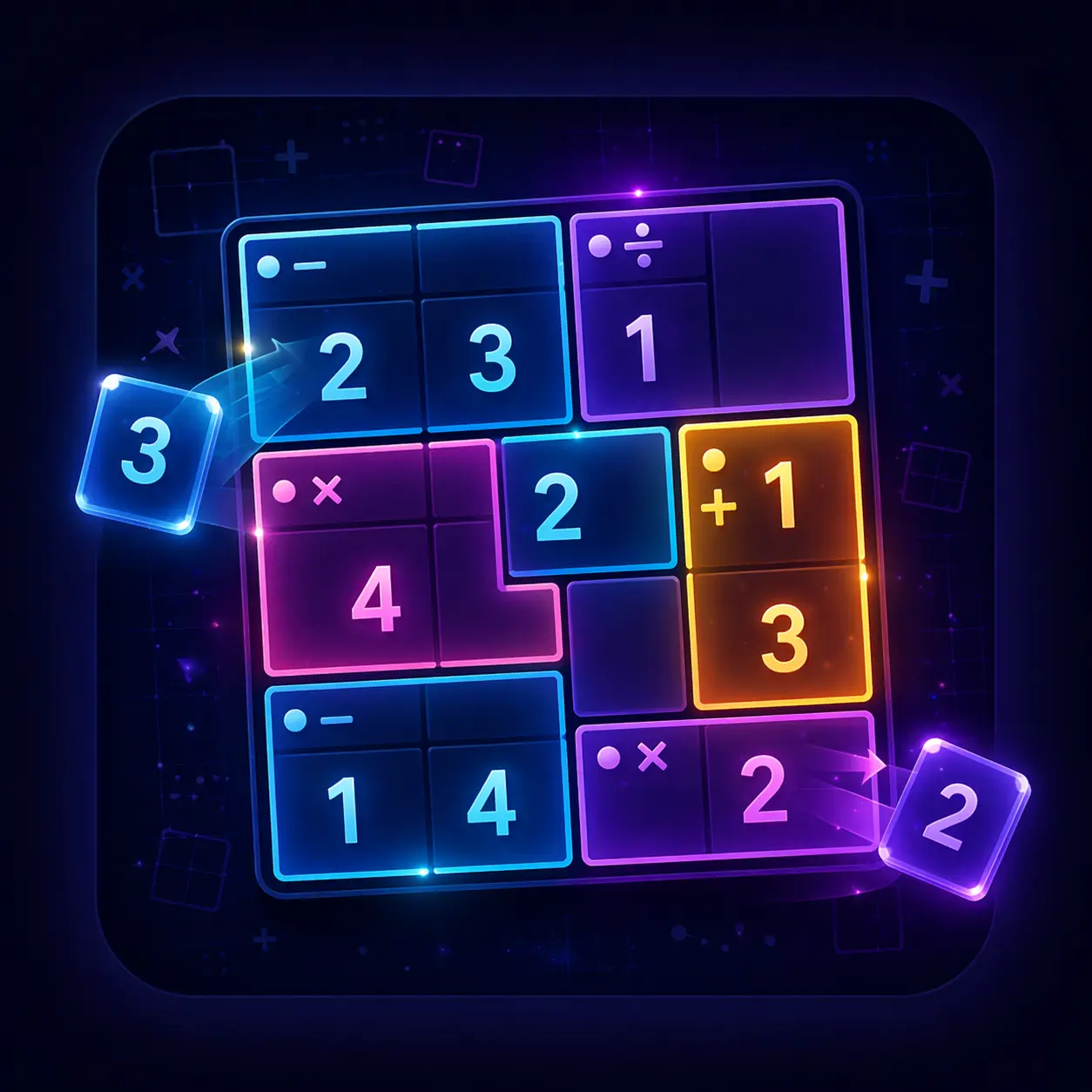
Use the target labels on each cage to work out the only valid numbers in every row and column.
Kakuro
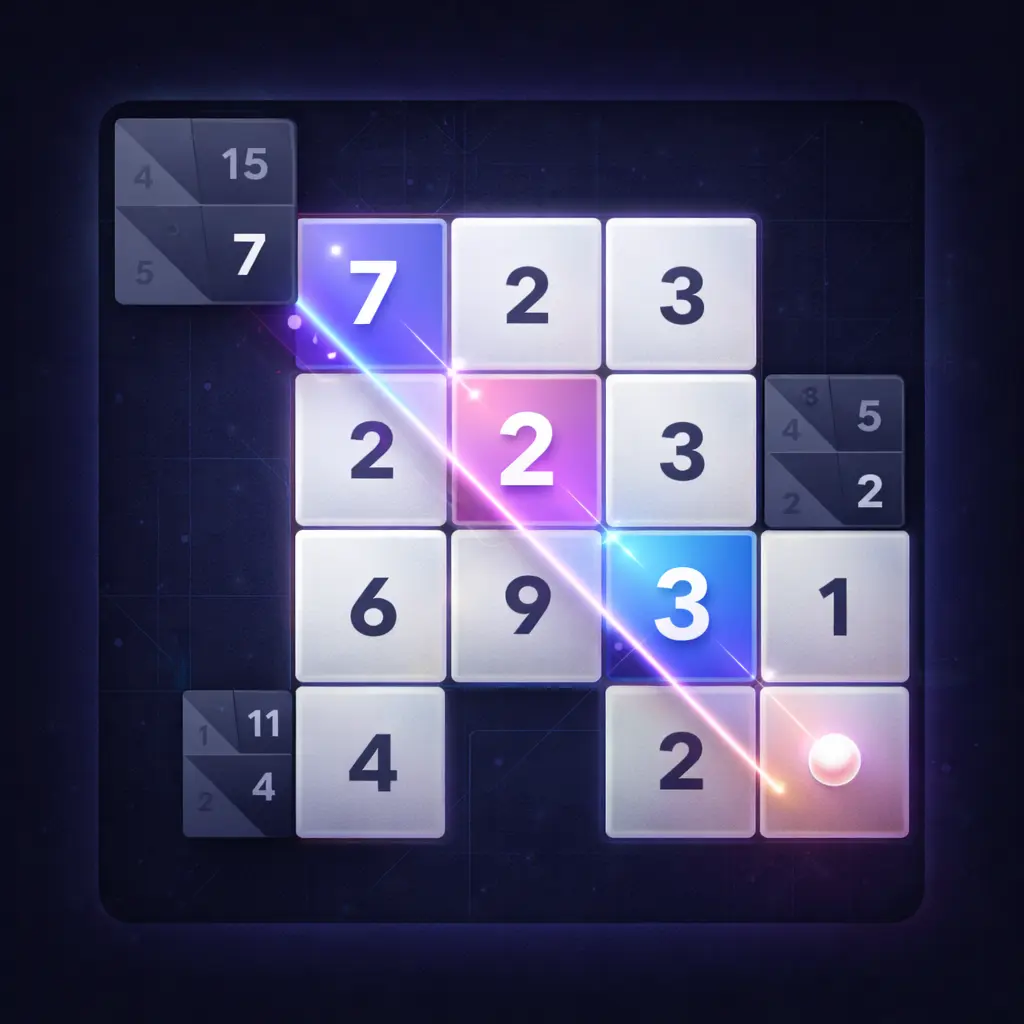
Enter digits from 1 to 9 into the white cells so that the sum of each horizontal or vertical "run" matches the clue in the shaded cell to its left or top. Crucially, a digit cannot be repeated within the same run. Use logic to determine which combinations fit the available space.
Why Number Puzzles Are Genuinely Good for Your Brain
Number puzzles are not just a way to kill time — they are one of the most effective forms of mathematical cognitive exercise available without a classroom. Unlike drills or flashcards, puzzles embed arithmetic and logical reasoning inside a motivating challenge structure. Here is what each core skill domain in our collection actually develops.
Arithmetic Fluency
Puzzles like Kakuro, KenKen, and Number Pyramid require you to perform mental arithmetic repeatedly under mild pressure. This kind of spaced, contextual practice builds arithmetic automaticity — the ability to recall sums, products, and factorizations instantly — far more effectively than rote memorisation of multiplication tables. Players who complete Kakuro regularly report measurable improvement in the speed of mental addition and subtraction.
Logical Constraint Reasoning
Sudoku and KenKen are constraint-satisfaction problems — a category that requires finding values that simultaneously satisfy multiple independent rules. This is the same class of problem that appears in scheduling, resource allocation, and algorithm design. Regular Sudoku practice measurably strengthens the ability to track and manage multiple interacting constraints, which is one of the most transferable analytical skills across professional disciplines.
Pattern Recognition
Number Sequence and Prime Hunter both hinge on pattern recognition — detecting mathematical regularities in numerical data. This is the foundational skill behind data analysis, scientific observation, and inductive reasoning. Number Sequence puzzles train the ability to generate and test hypotheses about hidden rules, which mirrors the scientific method at a small scale. Players who practise regularly develop a broader library of recognisable mathematical patterns they can apply outside the game context.
Strategic Planning
2048 and Number Tower both punish reactive play and reward multi-step planning. In 2048, every swipe has global consequences across the entire board, so experienced players maintain a mental model of the board state several moves ahead. This kind of look-ahead planning is a core executive function — the same cognitive capability underlying effective decision-making, project management, and chess. Even ten minutes a day of strategic puzzle play has been linked to improvements in planning and working memory in cognitive science research.
Every Number Puzzle, Explained in Detail
Not sure where to begin? Below is a complete breakdown of all 8 puzzles — how each one works, what mathematical skills it builds, a pro strategy tip, and who it is best suited for.
2048
Swipe or use arrow keys to move tiles. When two tiles with the same number touch, they merge into one! Each move adds a new 2 or 4 tile to the board. Your goal is to reach the 2048 tile, but you can keep playing for a high score until the board is full and no moves remain.
How it works
Slide all tiles on a 4x4 grid in one of four directions. Every slide moves every tile as far as possible, and two tiles with the same number that collide merge into their sum. After each move a new tile (2 or 4) appears in a random empty cell. The game ends when the board is full and no merges remain.
Skills it builds
Despite its simple rules, 2048 is a masterclass in forward planning and spatial reasoning. Each move has cascading consequences across the entire board, so strong players think two or three moves ahead rather than reacting to individual tiles. The game also builds intuitive number-doubling fluency: experienced players instantly recognise that 512 + 512 = 1024 without calculating.
Pro tip: Pick one corner — bottom-left works well — and commit to keeping your highest tile there throughout the game. Build a descending sequence along the bottom row (e.g. 512, 256, 128, 64) and never swipe upward unless forced. This snake strategy prevents the high tile from becoming stranded in the centre where it blocks merges.
Best for: Fans of strategic puzzle games, players who enjoy exponential thinking, and anyone who wants a short session that rewards careful planning over reflexes.
Play 2048 →Number Sequence
Analyze the sequence of numbers to identify the underlying mathematical pattern. Select the correct number from the options provided to complete the sequence. As you solve puzzles and advance levels, the patterns become more complex, involving addition, multiplication, or multi-step logic.
How it works
Each puzzle presents a series of numbers with one or more missing values. You must identify the underlying mathematical rule — which could involve addition, multiplication, powers, alternating operations, or multi-step formulas — and select the correct number from multiple-choice options. Difficulty increases across levels as patterns grow more complex.
Skills it builds
Number Sequence is one of the purest tests of mathematical pattern recognition in a casual format. It requires holding a sequence in working memory, generating hypotheses about the rule, testing each against multiple data points, and committing to an answer. This exact process underpins numerical reasoning sections of IQ tests, GMAT, and GRE examinations.
Pro tip: Always check the difference between consecutive terms first — is it constant, increasing, or doubling? If the differences themselves form a pattern, you are dealing with a second-order sequence. If neither works, check for alternating rules where odd-position and even-position terms each follow separate patterns.
Best for: Students preparing for aptitude tests, anyone who enjoys mathematical detective work, and players looking to sharpen analytical reasoning without time pressure.
Play Number Sequence →Number Pyramid
Fill in the missing numbers by calculating the sum of the two blocks below each block. Perfect for practicing mental math and logic.
How it works
Each cell in a triangular pyramid contains a number equal to the sum of the two cells directly below it. Some cells are pre-filled; the rest are blank. Your task is to deduce the missing values using the constraint that every cell must satisfy the sum rule. Puzzles range from small three-row pyramids to large five-row configurations with many unknowns.
Skills it builds
Number Pyramid builds arithmetic fluency and constraint-satisfaction reasoning — the ability to work within a system of interdependent rules rather than solving elements in isolation. Harder puzzles require working both bottom-up (summing known values upward) and top-down (subtracting from known sums to find missing addends), which develops flexible mathematical thinking.
Pro tip: Start from the row with the most pre-filled cells and work outward. If you know two of three values in a triplet you can always find the third. Mark cells you are confident about before filling cells that require more inference — this prevents errors from propagating upward through the pyramid.
Best for: Students practising arithmetic and algebra, puzzle fans who enjoy constraint-logic games, and anyone who wants a calm pressure-free number challenge.
Play Number Pyramid →Number Tower
Follow the rule displayed at the top of the screen to select the correct numbers from the grid. Each correct selection builds your tower toward the target height (3 blocks for Easy, 5 for Medium, and 8 for Hard). Correct answers earn points and multipliers, while wrong selections cost 3 seconds of time.
How it works
A rule is displayed at the top of the screen — for example, select multiples of 7, or select even numbers greater than 50. You must identify and click all matching numbers from the grid before the timer expires. Each correct selection builds your tower; incorrect clicks subtract time. Reaching the target tower height advances you to the next level.
Skills it builds
Number Tower develops rapid numerical classification — the ability to quickly evaluate whether a number meets multiple criteria simultaneously. Higher levels combine two or three conditions, which exercises the same parallel-processing skills used in spreadsheet analysis, data filtering, and mental arithmetic in real-world professional contexts.
Pro tip: Read the rule completely before the timer starts. Multi-condition rules are where most players lose time — they process one condition, click, then notice the second condition too late. For rules involving primes, memorise the primes below 50 before you start, since most grids draw heavily from this range.
Best for: Players who enjoy fast-paced games with a mathematical twist, students practising number properties, and anyone building mental math speed.
Play Number Tower →Prime Hunter
Identify and click on prime numbers—numbers divisible only by 1 and themselves—within the grid. Find all primes before the timer expires to level up. Be careful: clicking a non-prime number reduces your remaining time by 5 seconds. Higher levels feature larger grids and broader number ranges.
How it works
A grid of numbers appears on screen. Your goal is to click every prime number in the grid before the timer runs out. Clicking a non-prime deducts seconds from your remaining time. As you advance through levels, grids grow larger and number ranges extend into the hundreds and thousands, where primality is harder to verify at a glance.
Skills it builds
Prime Hunter builds deep familiarity with prime numbers — their distribution, their density across different ranges, and the quick divisibility tests that identify them. Regular play ingrains divisibility instincts for 2, 3, 5, 7, 11, and 13, which collectively eliminate most composite numbers in under a second.
Pro tip: Learn the sieve approach: immediately eliminate all even numbers except 2, all multiples of 5 except 5, and all numbers whose digits sum to a multiple of 3. This three-step filter eliminates roughly 70 percent of composite numbers instantly, leaving a much smaller set to evaluate carefully. For numbers above 100, also check divisibility by 7, 11, and 13.
Best for: Students studying number theory, anyone preparing for math competitions, and players who want to build genuine mathematical intuition rather than just puzzle-solving habit.
Play Prime Hunter →Sudoku
Fill the 9x9 grid so that every row, every column, and every 3x3 internal box contains all digits from 1 to 9 without any repeats. Select a cell and use the number pad to place your guess. Use the Eraser for mistakes and keep an eye on the timer to track your concentration speed.
How it works
Fill a 9x9 grid with digits 1 through 9 so that every row, every column, and every 3x3 box contains each digit exactly once. Puzzles ship with a subset of cells pre-filled; the difficulty rating determines how many cells are given and how much logical deduction is required. No guessing is needed on a well-formed Sudoku — every puzzle has a unique solution reachable by pure logic.
Skills it builds
Sudoku is the gold standard of constraint-satisfaction puzzles. It trains two complementary reasoning modes: candidate elimination (ruling out digits that cannot appear in a cell based on existing placements) and naked or hidden subset detection (identifying groups of cells that must contain a specific set of digits). These skills transfer directly to logical reasoning tasks across mathematics, computer science, and analytical problem-solving.
Pro tip: Never guess. Every Sudoku with a unique solution can be completed by logic alone. Start with the digit that appears most often in the initial puzzle — it has the fewest remaining positions, making placements easy. Then look for naked singles (cells with only one possible digit) and hidden singles (a digit that can only go in one cell within a row, column, or box). These two techniques alone solve most beginner and intermediate puzzles.
Best for: Puzzle enthusiasts of all experience levels, logical thinkers who enjoy systematic deduction, and players looking for a timeless game with decades of proven cognitive benefit.
Play Sudoku →KenKen
Use the target labels on each cage to work out the only valid numbers in every row and column.
How it works
Fill an NxN grid (typically 4x4 to 6x6) with digits 1 through N so that no digit repeats in any row or column. The grid is divided into cages — outlined groups of cells — each labelled with a target number and an arithmetic operation. The digits in each cage must combine using that operation to produce the target. A cage labelled 12x containing three cells must hold three digits whose product is 12.
Skills it builds
KenKen uniquely combines the constraint logic of Sudoku with arithmetic reasoning, making it one of the most complete mathematical puzzle formats available. Solving requires simultaneous management of three constraint systems: row uniqueness, column uniqueness, and cage arithmetic. This multi-constraint reasoning is directly analogous to algebraic problem-solving and systems of equations.
Pro tip: Start with cages that have only one valid digit combination. A two-cell cage labelled 1-minus in a 4x4 grid can only contain pairs differing by 1: (1,2), (2,3), or (3,4). A two-cell 24x cage in a 6x6 grid can only be (4,6). Pinning these down first dramatically constrains the remaining grid. For division cages, remember the larger number is always the dividend — useful for ordering digits within the cage.
Best for: Players who find pure Sudoku too simple but want arithmetic practice woven into logic puzzles, and students looking for a game that genuinely reinforces multiplication and division fluency.
Play KenKen →Kakuro
Enter digits from 1 to 9 into the white cells so that the sum of each horizontal or vertical "run" matches the clue in the shaded cell to its left or top. Crucially, a digit cannot be repeated within the same run. Use logic to determine which combinations fit the available space.
How it works
Kakuro is a crossword-style grid where every white cell contains a digit from 1 to 9. Shaded cells contain clues: the number above a diagonal slash is the sum of digits in the horizontal run to the right; the number below is the sum of the vertical run below. Within any single run, no digit may repeat. The puzzle is complete when all runs match their clues.
Skills it builds
Kakuro builds a specific and valuable mathematical skill: combinatorial arithmetic — knowing which sets of distinct digits sum to a given total. Experienced players internalise that a two-cell run summing to 3 must be 1 and 2, a three-cell run summing to 6 must be 1, 2, and 3, and a nine-cell run summing to 45 must contain every digit from 1 to 9. This systematic enumeration of possibilities is the foundation of combinatorics and discrete mathematics.
Pro tip: Memorise the forced combinations — runs where only one valid set of digits exists. Two cells summing to 3 are always 1 and 2. Two cells summing to 16 are always 7 and 9. Three cells summing to 6 are always 1, 2, and 3. Three cells summing to 23 are always 6, 8, and 9. These locked combinations frequently determine crossing cells immediately, cascading solutions through the puzzle.
Best for: Players who loved crosswords but want a mathematical equivalent, Sudoku fans looking for a harder challenge, and anyone interested in developing combinatorial number sense.
Play Kakuro →How to Choose the Right Number Puzzle
You want a quick 5-minute session
2048 and Number Tower are designed for short, self-contained sessions. 2048 has a natural endpoint each game, and Number Tower's timer format creates a focused burst of activity that feels satisfying and complete within a few minutes. Prime Hunter on easy difficulty also works well as a quick warm-up.
Best picks: 2048, Number Tower, Prime Hunter (easy)
You want a deep thinking challenge
Kakuro and hard-difficulty Sudoku are the most intellectually demanding options. Both require extended chains of logical deduction with no guessing, and a well-crafted Kakuro puzzle can occupy a serious solver for 20 to 30 minutes. KenKen on its larger grid sizes is a close third.
Best picks: Kakuro, Sudoku (hard), KenKen (6x6)
You want to build real math skills
Number Sequence and Number Pyramid are the best choices if the primary goal is mathematical skill development rather than entertainment alone. Both directly exercise arithmetic and pattern-recognition skills taught in school curricula. Prime Hunter builds number theory intuition useful well beyond the game context.
Best picks: Number Sequence, Number Pyramid, Prime Hunter
Frequently Asked Questions
What free number puzzles are available on Triviaah?
Triviaah offers eight free number puzzles: 2048, Number Sequence, Number Pyramid, Number Tower, Prime Hunter, Sudoku, KenKen, and Kakuro. Each targets different mathematical and logical skills, and all are playable immediately with no account required.
Which number puzzle is best for beginners?
Number Sequence and Number Pyramid are the most accessible — both have clear rules and no time pressure on beginner difficulty. 2048 is also easy to learn in under a minute even though mastery takes much longer. Sudoku on easy difficulty is an excellent first constraint-logic puzzle.
Which number puzzle is the most challenging?
Kakuro is the most demanding overall, requiring simultaneous arithmetic and constraint reasoning across intersecting runs. Hard Sudoku and large KenKen grids are also highly challenging. Prime Hunter at high levels becomes extremely difficult as numbers extend into the thousands.
Are number puzzles good for children?
Yes. Number Pyramid and Number Sequence are suitable from around age 8, reinforcing arithmetic taught in elementary school. Prime Hunter and Number Tower suit ages 10 and up. Sudoku, KenKen, and Kakuro are best from age 12 onwards. All games are free of targeted advertising and require no personal information.
What mathematical skills do number puzzles develop?
2048 builds spatial reasoning and exponential number sense. Number Sequence develops inductive pattern recognition. Number Pyramid strengthens arithmetic fluency and algebraic thinking. Prime Hunter builds number theory intuition. Sudoku and KenKen develop constraint-satisfaction logic. Kakuro builds combinatorial arithmetic. Number Tower builds numerical classification speed.
Do I need to create an account to play?
No account or registration is required. All eight number puzzles are immediately playable in your browser without signing up. Progress within a session is saved automatically so you can pause and return to any puzzle without losing your place.
Can I play on mobile?
Yes. All puzzles are fully responsive and touch-optimised for iOS and Android browsers. No app download is needed. Puzzles like Sudoku and 2048 have touch-specific controls — tap to select and swipe to move — that feel natural on a phone screen.
How often do new puzzles appear?
Sudoku and Kakuro generate new daily puzzles each day. 2048 and Number Tower generate fresh boards on demand each session. Number Sequence and Prime Hunter draw from large question pools so content rarely repeats. KenKen and Number Pyramid offer daily variants alongside unlimited on-demand play.
About Triviaah's Number Puzzles Collection
Triviaah built this number puzzles collection to cover the full spectrum of mathematical puzzle types — from fast-paced classification games to deep constraint-logic challenges — in a single free, no-login destination. The eight puzzles were chosen because each one targets a genuinely distinct cognitive and mathematical skill. There is no redundancy in the collection: 2048 does something Sudoku does not, and Kakuro develops skills that Prime Hunter cannot replicate.
The collection spans three broad mathematical domains. Arithmetic-primary puzzles — Kakuro, KenKen, and Number Pyramid — develop the fluency and combinatorial number sense that underpin all higher mathematics. Logic-primary puzzles — Sudoku and Number Sequence — build the deductive and inductive reasoning skills that transfer to analytical tasks across every discipline. Speed-and-classification puzzles — 2048, Number Tower, and Prime Hunter — develop the rapid numerical evaluation and working memory that support day-to-day mathematical thinking.
All eight puzzles are free, require no account, and work on any modern browser including mobile. Daily content refreshes on selected puzzles ensure there is always new material waiting, while the on-demand and generative puzzles provide unlimited depth for players who want to go beyond the daily offering.
Number Puzzles vs. Other Brain Games
Memory games like card matching target working memory capacity directly but have limited transfer to real-world mathematical or analytical skills. Number puzzles also exercise working memory — you must hold partial solutions and constraints in mind while solving — but they simultaneously train the reasoning skills that make that memory useful. Constraint-logic puzzles like Sudoku and KenKen are among the few casual game types where cognitive gains reliably transfer outside the game context.
Word games primarily exercise language-specific neural networks. Number puzzles engage the dorsolateral prefrontal cortex more heavily through arithmetic operations and logical constraint management. The two types are complementary: playing both delivers broader cognitive coverage than specialising in either alone. See our Word Games collection for the language-focused half of that combination.