Retro Games
Relive the golden age of gaming with free classic retro games including Minesweeper, Tetris, Pong, Snake, Breakout, Pac-Man, Space Invaders, and Tic Tac Toe. Enjoy timeless arcade, puzzle, strategy, and reflex challenges optimized for modern mobile and desktop play.
Last Updated: Sep 11, 2026
All Retro Games
Tic Tac Toe
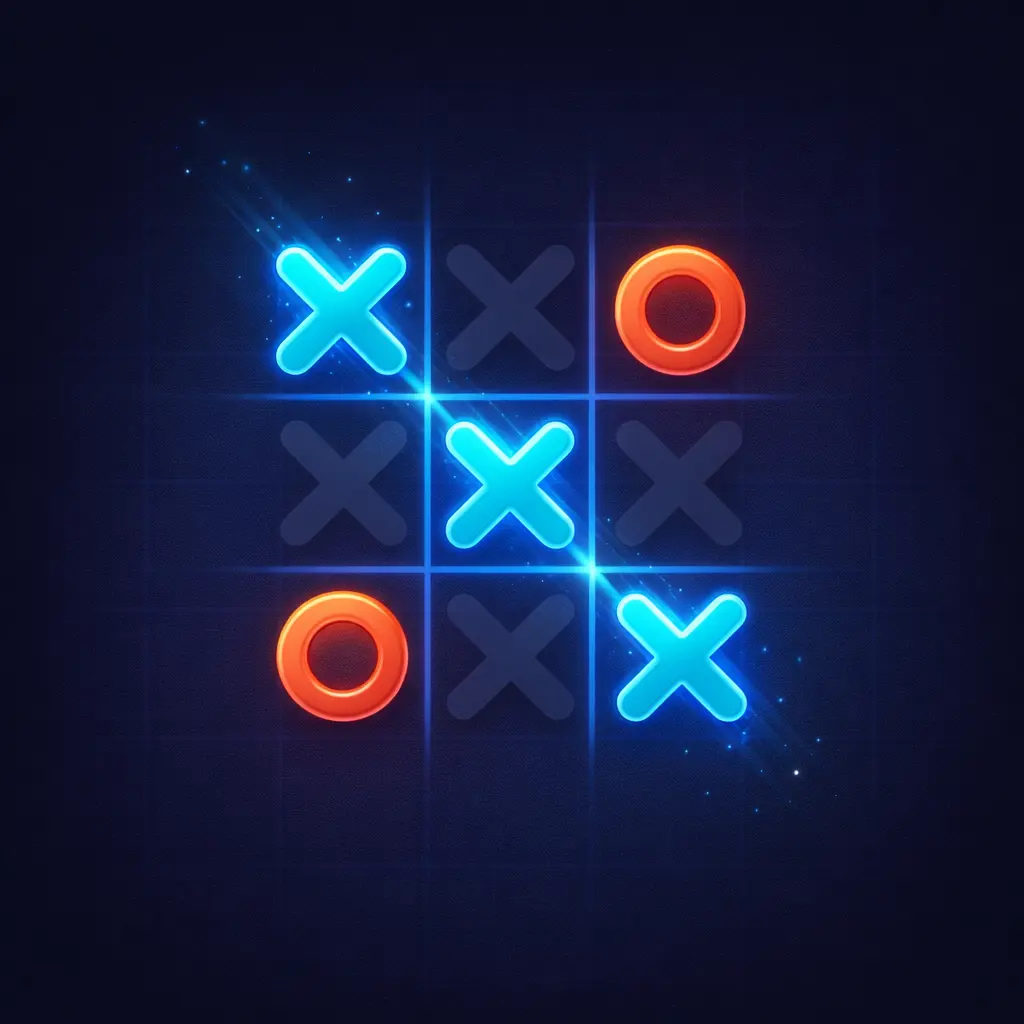
The rules of Tic Tac Toe are simple: players take turns placing their mark (either an X or an O) in one of the nine squares of a 3x3 grid. The first player to align three of their marks in a horizontal, vertical, or diagonal row wins the game. If all nine squares are filled without anyone achieving three in a row, the game ends in a draw. To play, simply click on an empty square to place your symbol and try to outmaneuver your opponent or the AI.

Snake
In Snake, you control a line that grows in length as it consumes food items scattered across the screen. The primary goal is to eat as much as possible to increase your score without colliding with the screen boundaries or the snake's own body. As the snake grows longer, the game becomes progressively more difficult as navigating the space becomes restricted. Use the arrow keys or swipe gestures to change the snake's direction and keep it moving.
Pong
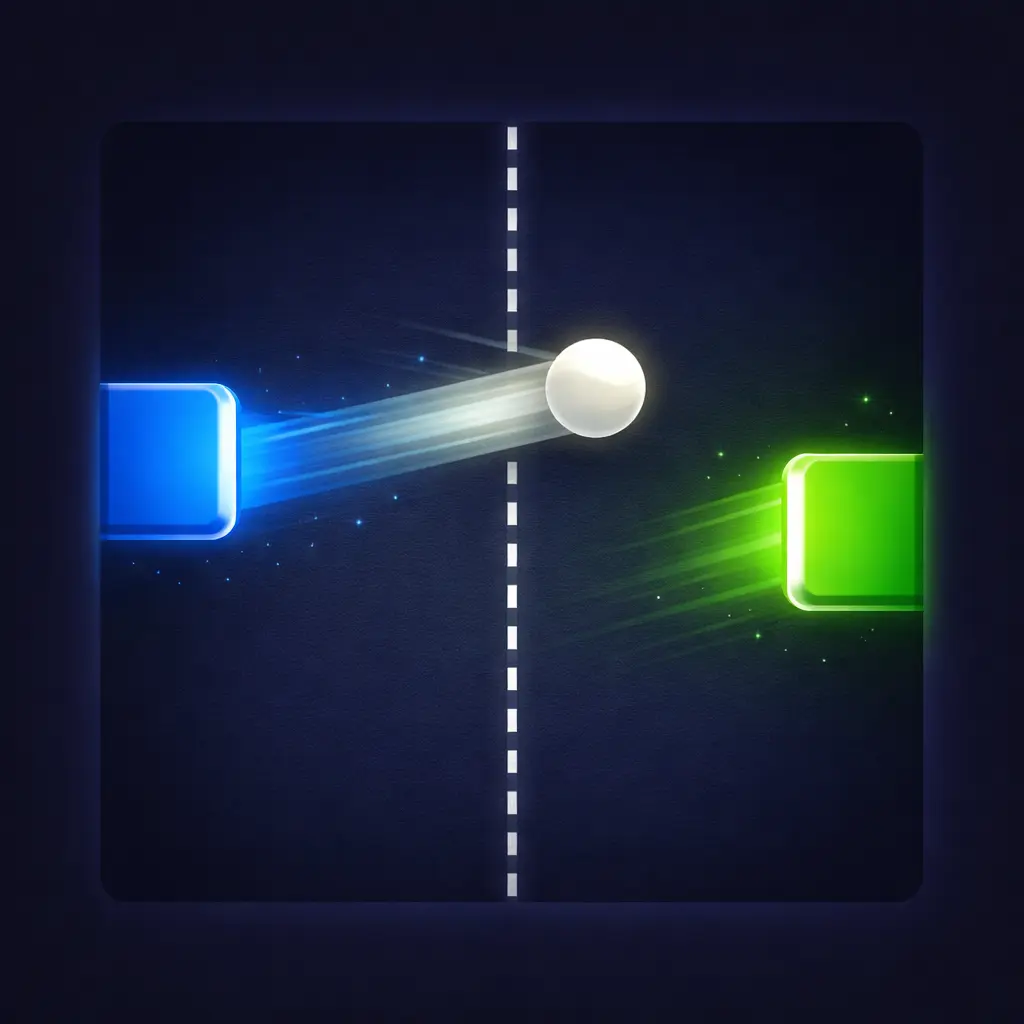
Pong is a classic two-dimensional sports game that simulates table tennis. Each player controls an on-screen paddle by moving it vertically across the left or right side of the screen. Players use the paddles to hit a ball back and forth. The goal is to reach a set number of points before the opponent. Points are earned when one player fails to return the ball to the other. Precision and timing are key to keeping the ball in play and outsmarting your opponent's defense.
Minesweeper
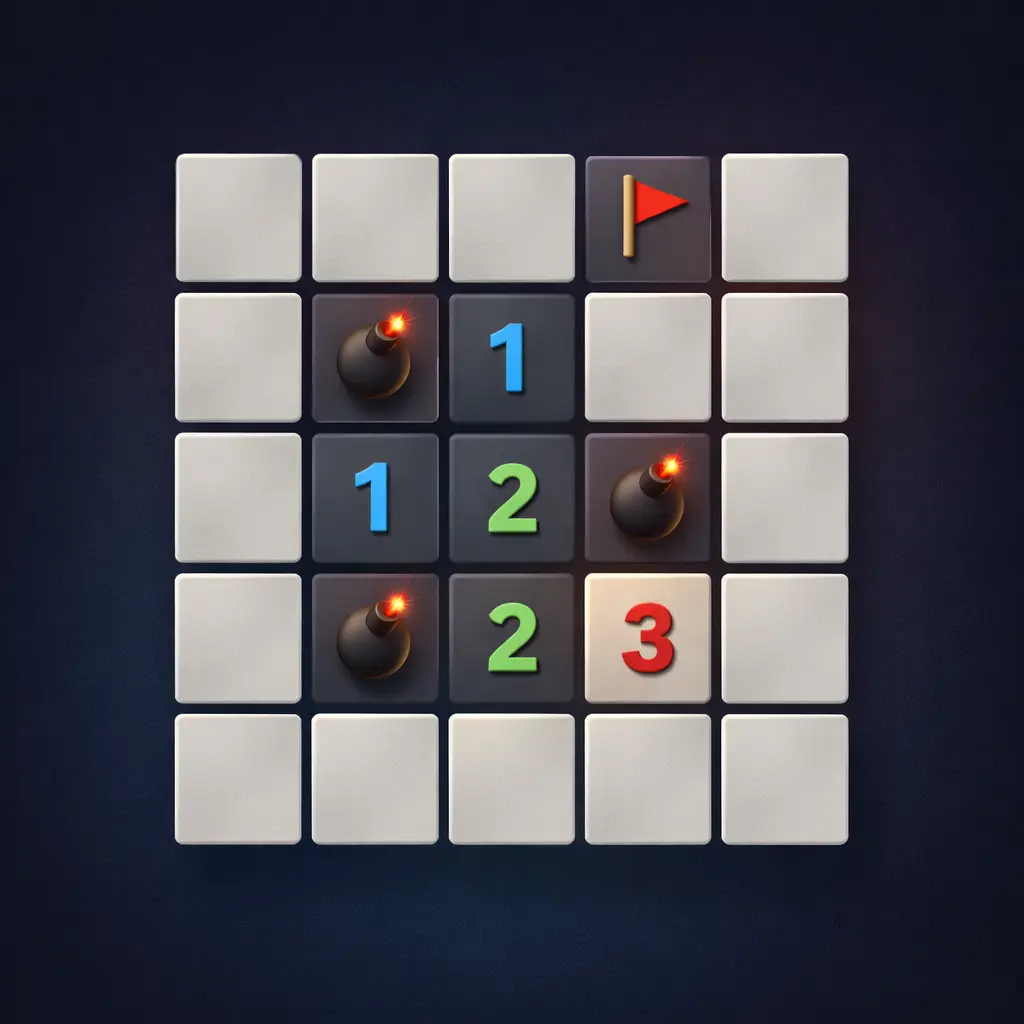
Minesweeper is a logic-based puzzle game where the objective is to clear a rectangular board containing hidden 'mines' without detonating any of them. Players click on squares to reveal what is underneath. If a square contains a mine, the game is over. If it doesn't, a number is revealed indicating how many mines are in the adjacent eight squares. Using these clues, players can deduce which squares are safe and which contain mines, marking suspected mines with flags.
Tetris
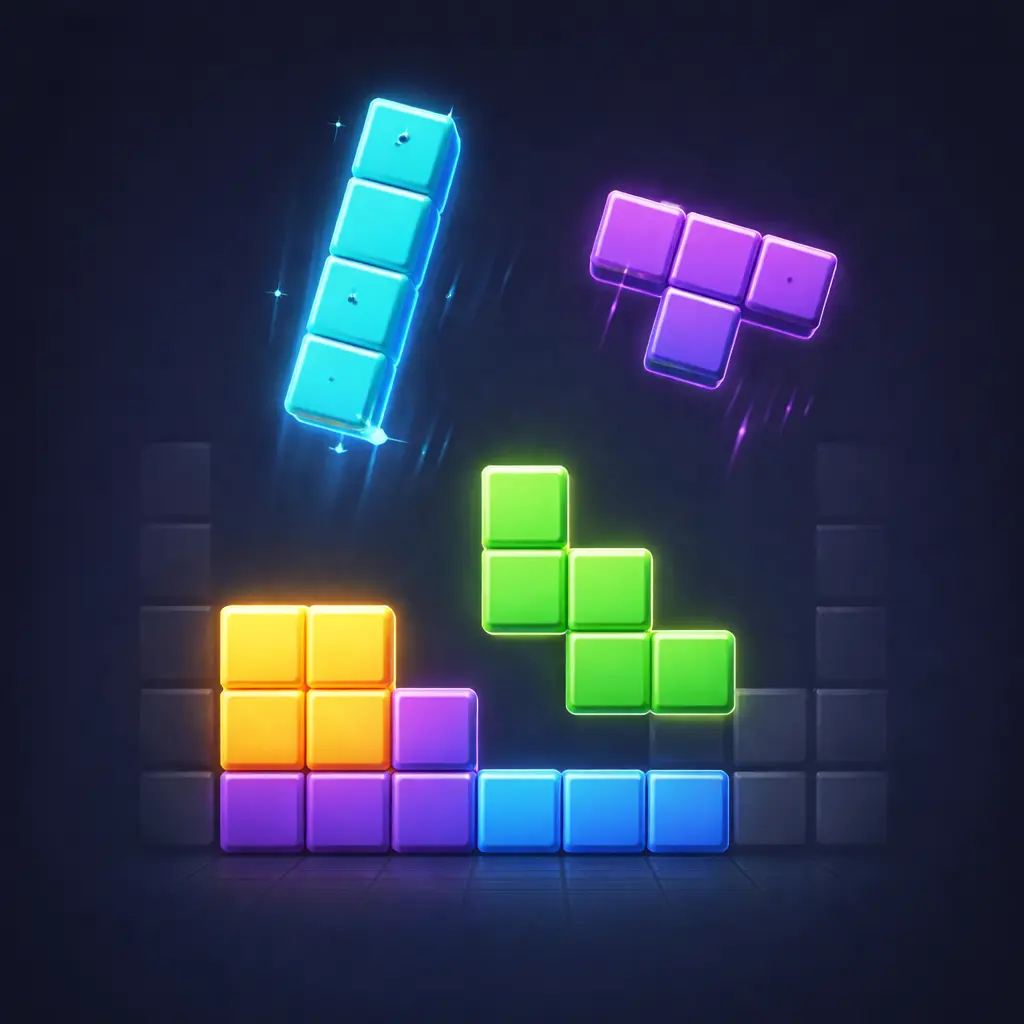
Tetris is the legendary block-stacking puzzle game. Different shaped blocks, known as Tetriminos, fall from the top of the screen into a well. Players must rotate and move these pieces to create solid horizontal lines. When a line is completely filled with blocks, it disappears, and the player earns points. The game ends if the pieces stack up to the top of the screen. As you progress, the pieces fall faster, demanding quick thinking and precise placement.
Space Invaders
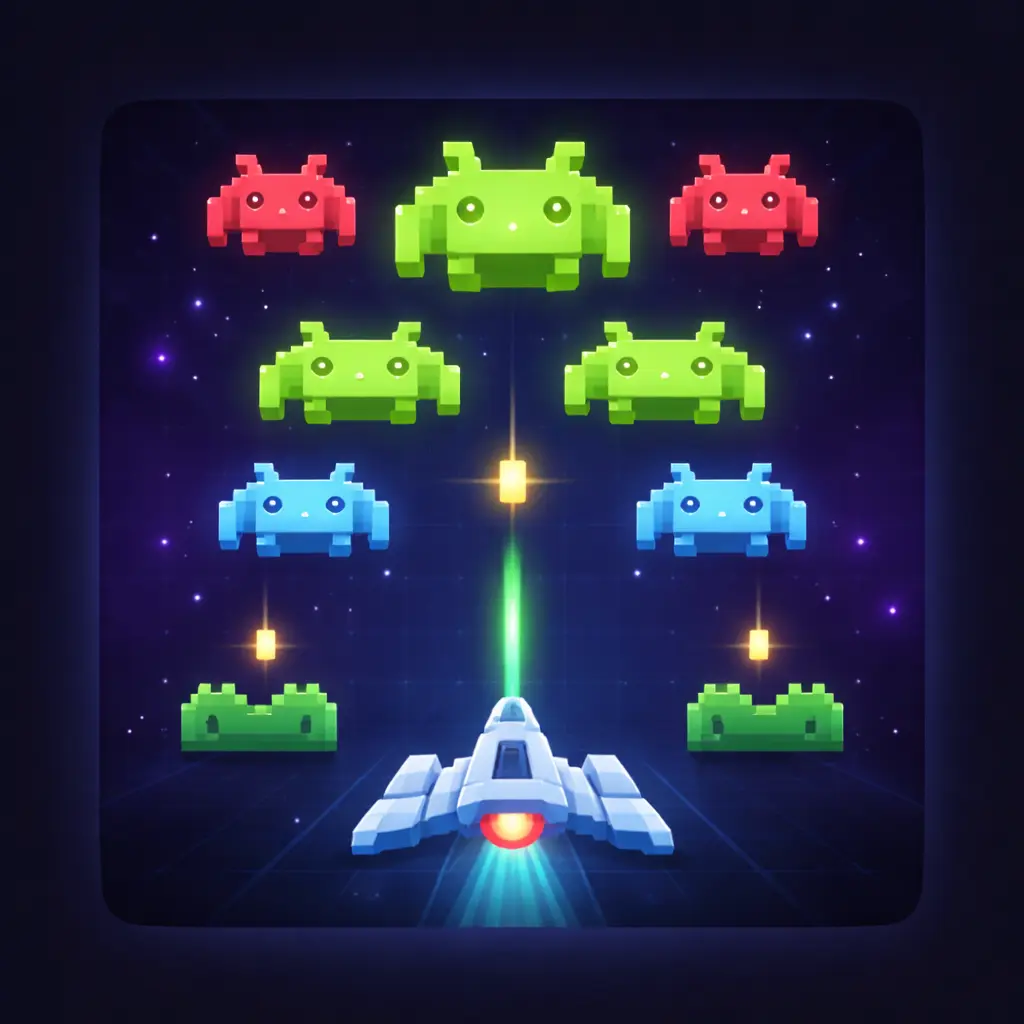
Space Invaders is a seminal shoot 'em up where you control a laser cannon that moves horizontally across the bottom of the screen. Waves of aliens descend from the top, moving side-to-side and dropping closer with each pass. Your mission is to destroy all the invaders before they reach the bottom or destroy your cannon with their projectiles. You can hide behind destructible bunkers for protection while timing your shots to clear the alien fleet.
PacMan
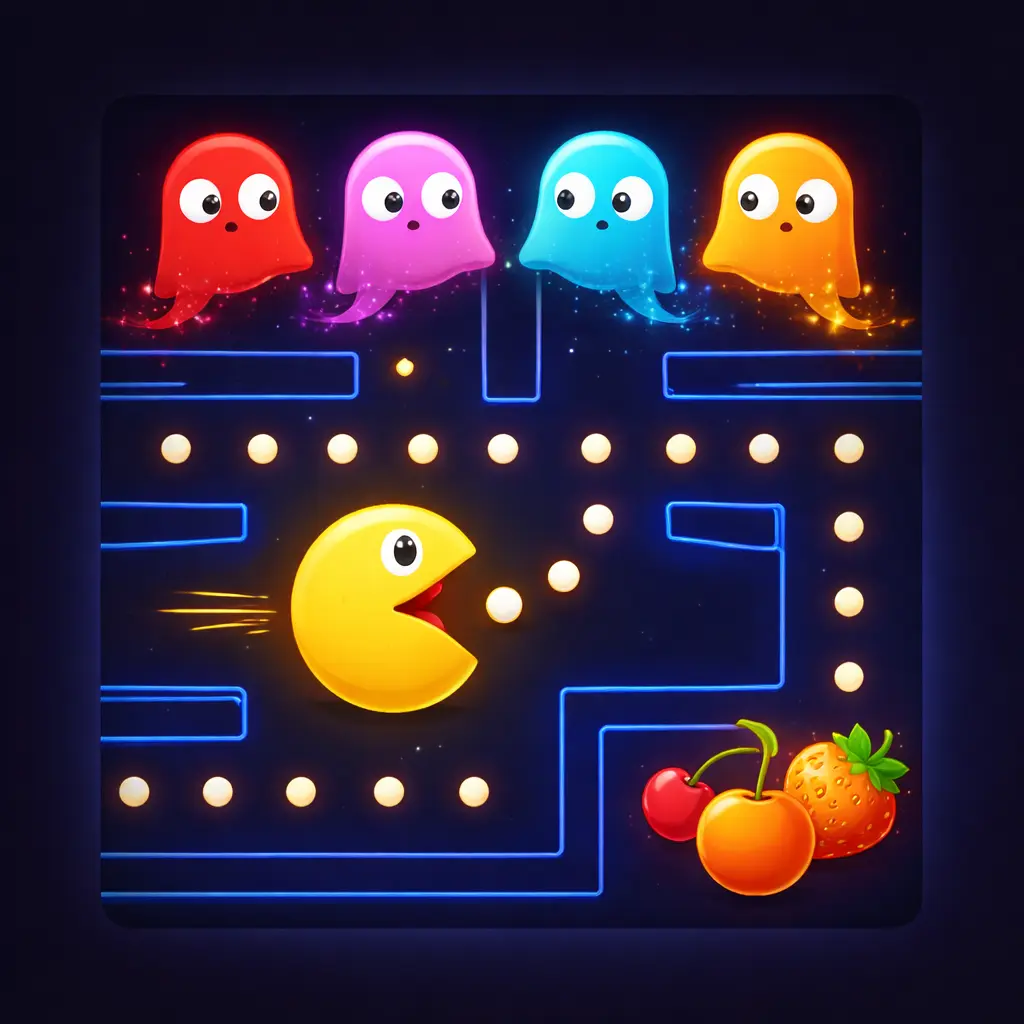
In PacMan, you navigate the titular character through a maze filled with dots (Pac-Dots) and four colorful ghosts. The goal is to eat all the dots in the maze to advance to the next level. Eating 'Power Pellets' temporarily turns the ghosts blue, allowing Pac-Man to eat them for extra points. Avoid contact with ghosts while they are in their normal state, as this will cost you a life. Fruit bonuses also appear periodically for additional scoring opportunities.
Breakout
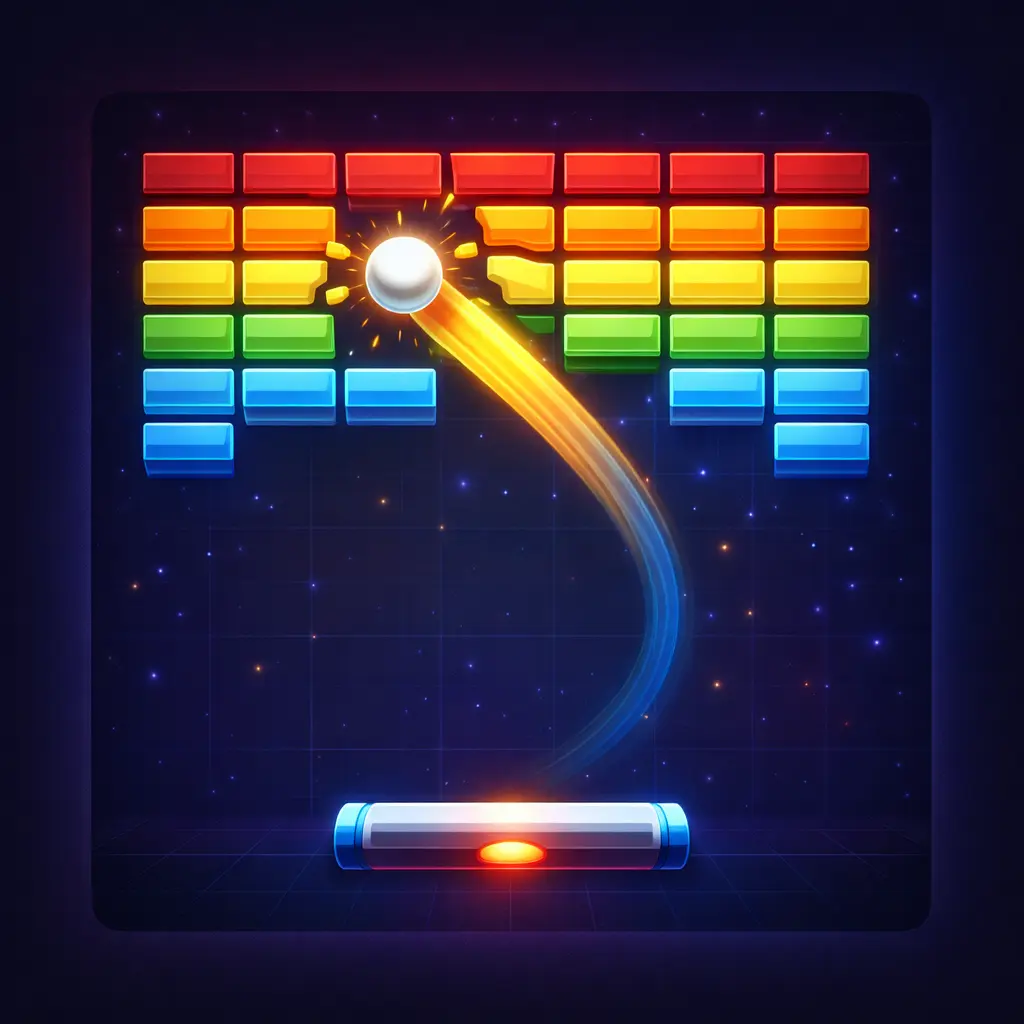
Breakout is a classic arcade game where you control a paddle at the bottom of the screen to bounce a ball upward. The goal is to hit and destroy layers of bricks at the top of the play area. Each time the ball hits a brick, it disappears, and you earn points. If the ball falls past your paddle, you lose a life. The level is completed once all bricks are cleared. Mastering the angle of the bounce is essential for targeting specific bricks and keeping the ball in play.
Every Retro Game, Explained in Detail
Not sure what to play first? Here is a full breakdown of all 8 classic games: why each one matters, what skills it builds, a practical strategy tip, and who it is best suited for.
Tic Tac Toe
The rules of Tic Tac Toe are simple: players take turns placing their mark (either an X or an O) in one of the nine squares of a 3x3 grid. The first player to align three of their marks in a horizontal, vertical, or diagonal row wins the game. If all nine squares are filled without anyone achieving three in a row, the game ends in a draw. To play, simply click on an empty square to place your symbol and try to outmaneuver your opponent or the AI.
Why it matters
Tic Tac Toe is one of the oldest strategy games because it teaches complete-information planning in its simplest form. Every move can be evaluated logically from the current board.
Skills it builds
Tic Tac Toe develops turn planning, fork creation, defensive blocking, and minimax thinking. It is a compact introduction to the same reasoning used in more complex strategy games.
Strategy tip: Take the center when available, block forks before single threats become unavoidable, and use corners to create two-way winning chances.
Best for: Beginners, children learning strategy, quick decision games, and players who want a calm classic between faster arcade sessions.
Play Tic Tac Toe->Snake
In Snake, you control a line that grows in length as it consumes food items scattered across the screen. The primary goal is to eat as much as possible to increase your score without colliding with the screen boundaries or the snake's own body. As the snake grows longer, the game becomes progressively more difficult as navigating the space becomes restricted. Use the arrow keys or swipe gestures to change the snake's direction and keep it moving.
Why it matters
Snake became one of the defining mobile games because it turns a single movement rule into a steadily tightening spatial puzzle. Every snack makes the route longer, so the board shifts from open navigation to careful path planning.
Skills it builds
Snake develops spatial awareness, route planning, impulse control, and risk assessment. Strong players think about where the snake will be in five moves, not just where the next snack appears.
Strategy tip: Use the board perimeter as a safety lane early, then fold inward in predictable rows. Random sharp turns create traps; smooth loops preserve escape routes.
Best for: Short arcade sessions, mobile play, high-score chasing, and players who like simple controls with rising pressure.
Play Snake->Pong
Pong is a classic two-dimensional sports game that simulates table tennis. Each player controls an on-screen paddle by moving it vertically across the left or right side of the screen. Players use the paddles to hit a ball back and forth. The goal is to reach a set number of points before the opponent. Points are earned when one player fails to return the ball to the other. Precision and timing are key to keeping the ball in play and outsmarting your opponent's defense.
Why it matters
Pong distilled competitive video games to their essentials: timing, angle control, and positioning. Its simple table-tennis loop remains one of the clearest examples of skill-based arcade design.
Skills it builds
Pong develops reaction time, hand-eye coordination, trajectory prediction, and tactical positioning. Good players control the paddle before the ball arrives instead of chasing it late.
Strategy tip: Use the paddle edges to change return angles, and recover toward the center immediately after each hit. Center control reduces how far you must travel on the next shot.
Best for: Beginners, quick two-player sessions, reflex practice, and players who want the most accessible retro game in the collection.
Play Pong->Minesweeper
Minesweeper is a logic-based puzzle game where the objective is to clear a rectangular board containing hidden 'mines' without detonating any of them. Players click on squares to reveal what is underneath. If a square contains a mine, the game is over. If it doesn't, a number is revealed indicating how many mines are in the adjacent eight squares. Using these clues, players can deduce which squares are safe and which contain mines, marking suspected mines with flags.
Why it matters
Minesweeper is a logic classic because every revealed number is a constraint. The game rewards deduction over speed at first, then turns into a fast pattern-recognition challenge as your confidence improves.
Skills it builds
Minesweeper develops deductive reasoning, probability judgment, pattern recognition, and careful risk management. It is one of the strongest retro games for pure logic practice.
Strategy tip: Start with forced moves around 1s and 2s. When a guess is unavoidable, choose the square that opens the largest likely safe area rather than the first unknown cell you see.
Best for: Logic puzzle fans, analytical players, and anyone who enjoys a slower retro game where careful thinking matters.
Play Minesweeper->Tetris
Tetris is the legendary block-stacking puzzle game. Different shaped blocks, known as Tetriminos, fall from the top of the screen into a well. Players must rotate and move these pieces to create solid horizontal lines. When a line is completely filled with blocks, it disappears, and the player earns points. The game ends if the pieces stack up to the top of the screen. As you progress, the pieces fall faster, demanding quick thinking and precise placement.
Why it matters
Tetris is the classic falling-block puzzle that proved a game can be instantly readable and endlessly deep. Its tetromino system rewards clean stacking, fast recognition, and long-term board management.
Skills it builds
Tetris builds spatial rotation, pattern recognition, working memory, and decision speed. Each placement changes future options, so expert play is as much about maintaining a flexible board as clearing lines.
Strategy tip: Keep the stack low and leave a single well open for the I-piece. Avoid covering holes, because buried gaps are far more expensive than an uneven surface.
Best for: Puzzle fans, reflex training, score attacks, and anyone who wants a timeless game with genuine mastery depth.
Play Tetris->Space Invaders
Space Invaders is a seminal shoot 'em up where you control a laser cannon that moves horizontally across the bottom of the screen. Waves of aliens descend from the top, moving side-to-side and dropping closer with each pass. Your mission is to destroy all the invaders before they reach the bottom or destroy your cannon with their projectiles. You can hide behind destructible bunkers for protection while timing your shots to clear the alien fleet.
Why it matters
Space Invaders helped define the fixed shooter. Its descending enemy formation creates a natural tension curve: the fewer invaders remain, the faster and more dangerous the board becomes.
Skills it builds
Space Invaders develops aiming rhythm, threat prioritization, timing, and composure under increasing speed. Players must balance clearing enemies with preserving defensive cover.
Strategy tip: Trim columns evenly and remove low invaders before they compress your movement space. Use cover sparingly; destroyed shields cannot save you later.
Best for: Classic shooter fans, score chasers, and players who enjoy escalating arcade pressure.
Play Space Invaders->PacMan
In PacMan, you navigate the titular character through a maze filled with dots (Pac-Dots) and four colorful ghosts. The goal is to eat all the dots in the maze to advance to the next level. Eating 'Power Pellets' temporarily turns the ghosts blue, allowing Pac-Man to eat them for extra points. Avoid contact with ghosts while they are in their normal state, as this will cost you a life. Fruit bonuses also appear periodically for additional scoring opportunities.
Why it matters
Pac-Man added character, maze routing, and enemy behavior to arcade design. The ghosts have distinct movement patterns, so success comes from learning routes rather than simply reacting.
Skills it builds
Pac-Man builds path planning, timing, enemy tracking, and risk-reward decision-making. Power pellets are limited resources, so when you use them matters as much as where you go.
Strategy tip: Clear one quadrant at a time and save power pellets for escapes or clustered ghost captures. Wandering across the maze without a route wastes safe openings.
Best for: Arcade fans, maze-game players, and anyone who wants classic character-driven gameplay with strategic movement.
Play PacMan->Breakout
Breakout is a classic arcade game where you control a paddle at the bottom of the screen to bounce a ball upward. The goal is to hit and destroy layers of bricks at the top of the play area. Each time the ball hits a brick, it disappears, and you earn points. If the ball falls past your paddle, you lose a life. The level is completed once all bricks are cleared. Mastering the angle of the bounce is essential for targeting specific bricks and keeping the ball in play.
Why it matters
Breakout transformed Pong into a single-player precision challenge. Every bounce changes the board, and the game rewards controlled angles more than frantic paddle movement.
Skills it builds
Breakout builds trajectory prediction, timing, fine motor control, and strategic targeting. Creating channels behind the brick wall is often the fastest path to big clears.
Strategy tip: Aim for side gaps early. Once the ball gets above the bricks, stay calm and prepare for sharp returns instead of overcorrecting.
Best for: Players who like precision arcade games, short sessions, and satisfying chain reactions.
Play Breakout->How to Choose the Right Retro Game
You want a quick arcade break
Pong, Snake, and Breakout are the best picks when you want immediate action with almost no setup. Each has simple controls, fast restarts, and a clear score or win condition that makes a five-minute session feel complete.
Best picks: Pong, Snake, Breakout
You want a thinking challenge
Minesweeper and Tic Tac Toe reward deduction, planning, and careful defense. Tetris also becomes deeply strategic at higher speeds, where clean stacking and future-piece planning matter more than pure reaction time.
Best picks: Minesweeper, Tic Tac Toe, Tetris
You want classic arcade pressure
Pac-Man and Space Invaders deliver the most iconic arcade tension: enemies close in, timing windows shrink, and every point must be earned. They are ideal when you want nostalgia with genuine skill progression.
Best picks: Pac-Man, Space Invaders
Why Retro Games Are Timeless
Pure Gameplay
Simple controls, deep strategy - no complex mechanics or tutorials needed
Brain Training
Improve logic, reflexes, pattern recognition, and strategic thinking
Quick Sessions
Perfect for short breaks - most games can be enjoyed in 5-10 minutes
Skill Progression
Easy to learn, challenging to master with endless replayability
Frequently Asked Questions
Q1.What makes retro games different from modern games?
Retro games focus on pure gameplay, simple mechanics, and skill-based challenges. Unlike modern games with complex graphics and stories, retro games are about mastering mechanics, achieving high scores, and enjoying timeless gameplay loops.
Q2.Are these retro games free to play?
Yes! All retro games are completely free to play with no registration required. You can enjoy unlimited gameplay across our entire retro game collection without any cost or subscriptions.
Q3.Which retro game is best for beginners?
Pong is perfect for beginners with its simple two-button controls. Snake is also beginner-friendly with gradual difficulty. For puzzle lovers, Tetris on easy mode is a great starting point before trying Minesweeper.
Q4.Can I play these games on mobile?
Absolutely! All retro games are fully optimized for mobile devices with touch controls. We've designed each game to work perfectly on smartphones and tablets, so you can enjoy classic gaming anywhere.
Q5.Do these games save my progress and high scores?
Yes! All games automatically save your high scores and progress in your browser's local storage. You can track your improvement over time and compete against your own personal best scores.
Q6.Are there multiplayer options?
Pong features both single-player (vs AI) and two-player modes. The other games are primarily single-player focused, offering personal challenge and high score competition against yourself and other players globally.
Retro Games Collection - Timeless Classic Arcade Experiences
Our retro games collection brings back the golden age of gaming with carefully preserved classics that have stood the test of time. From the strategic depth of Minesweeper to the addictive gameplay of Tetris, these games offer pure, unadulterated entertainment that modern titles often overlook.
Featured Retro Games
- •Minesweeper: The ultimate logic puzzle that challenges deductive reasoning and careful planning
- •Tetris: The iconic block-stacking puzzle that tests spatial awareness and quick thinking
- •Pong: The game that started it all - simple, competitive table tennis action
- •Snake: The mobile classic that challenges navigation and growth management
Cognitive Benefits
- ✓Enhanced problem-solving skills and logical thinking
- ✓Improved hand-eye coordination and reaction times
- ✓Better pattern recognition and spatial awareness
- ✓Development of strategic planning and resource management
Perfect For All Audiences
Nostalgia Seekers
- • Players who grew up with these classics in the 70s-90s
- • Fans of simple, skill-based gameplay
- • Those seeking a break from modern complex games
- • Parents introducing classic games to their children
New Generations
- • Young gamers discovering gaming history
- • Casual players looking for quick, engaging games
- • Puzzle enthusiasts seeking challenging logic games
- • Anyone wanting to improve cognitive skills through play
The Legacy of Retro Gaming
Retro games represent the foundation of modern gaming. Each game in our collection has influenced countless titles that followed. Pong demonstrated that electronic games could be commercially viable. Tetris showed how simple mechanics could create endless engagement. Minesweeper proved that logic puzzles could be as addictive as action games, and Snake pioneered mobile gaming on a global scale.
These games have endured for decades because they focus on what matters most: engaging gameplay, skill-based challenges, and pure fun. In an era of complex graphics and sprawling narratives, sometimes the simplest games provide the deepest satisfaction.
Ready to Play Some Classics?
Choose any game above to start playing instantly. No downloads, no registration, just pure retro gaming fun. Challenge yourself, beat your high scores, and experience why these games have remained popular for decades.