Word Games

Eight free word games, one destination. From the fast-paced letter grids of Boggle and Word Search to the slow-burn logic of Cryptogram and Crossgrid, every game in our collection is designed to build real vocabulary and cognitive skills — not just pass the time. No sign-up. No download. Just play.

Last Updated: May 14, 2026

8
Games
Daily
Updates
Free
Access
Loading Ad...

All Word Games

Anagram Scramble Word Game
#1

Anagram Scramble

Find the main word and bonus words using only the letters on the board.

Boggle Game Word Game
#2

Boggle Game

Boggle (Word Hunt) is a high-speed word discovery game. Create words by connecting adjacent letters in the grid—horizontally, vertically, or diagonally. Each letter must be connected to the previous one, and you cannot use the same letter tile twice for a single word. Reach the score threshold for each level to advance to the next difficulty. Longer words yield significantly higher point values.

Word Search Word Game
#3

Word Search

Word Search is a race against time to find hidden words within a grid of random letters. Words can be placed horizontally, vertically, or diagonally, and may be written forward or backward. Click and drag across the letters to highlight a word. Finding words quickly earns you a higher score, while the hint system can help you locate the first letter of a difficult word if you get stuck.

Word Ladder Word Game
#4

Word Ladder

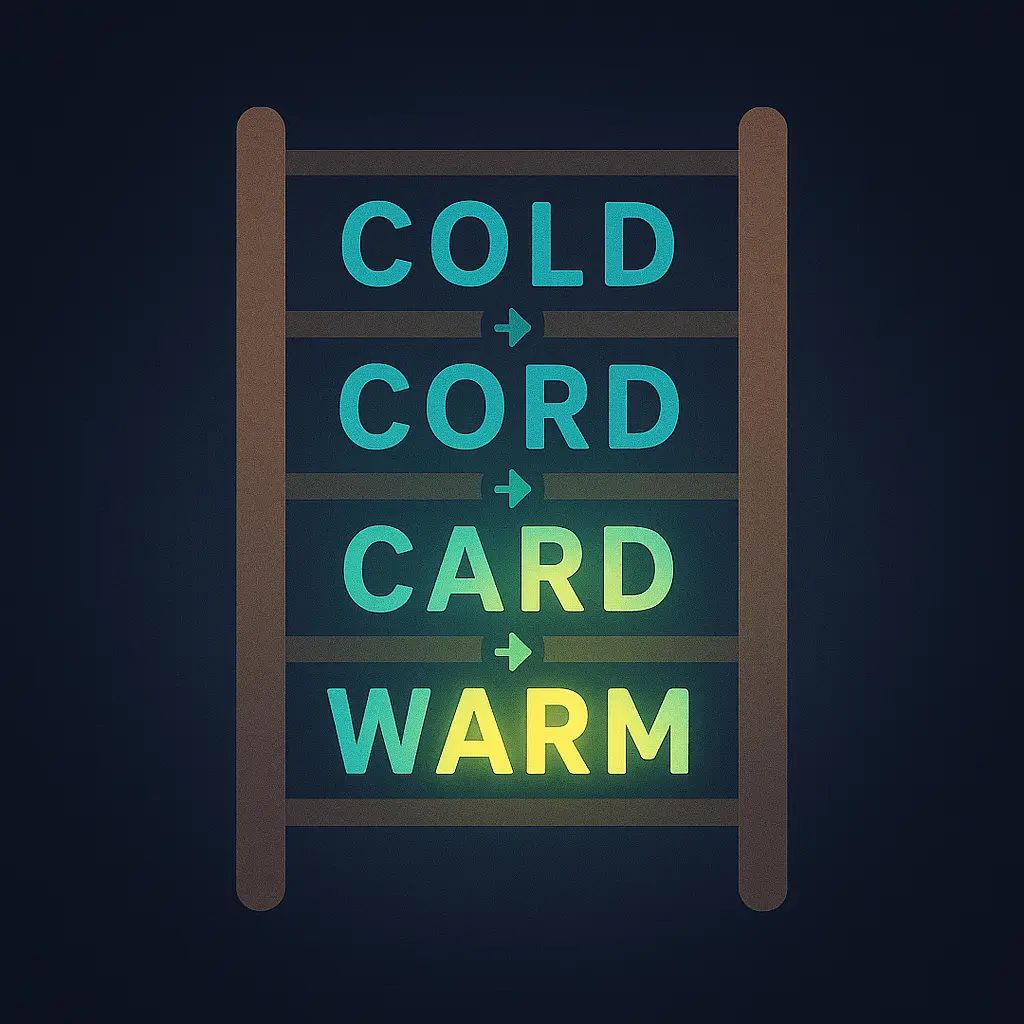
Word Ladder is a transformation puzzle where you turn a Start Word into an End Word in as few steps as possible. In each step, you must change exactly one letter of the current word to create a new, valid English word. For example, to get from COLD to WARM, you might go: COLD > CORD > WORD > WARD > WARM. Plan your path carefully to reach the target without getting stuck in a dead end.

Word Connect Word Game
#5

Word Connect

Designed to train your brain and grow your vocabulary, the game offers hundreds of levels with increasing difficulty—and no time limits, so you can play at your own pace.

Spelling Bee Word Game
#6

Spelling Bee

Spelling Bee challenges you to create as many words as possible using a set of seven letters arranged in a honeycomb grid. To find a valid word, it must be at least four letters long and MUST include the center letter at least once. Letters can be used more than once in a single word. Earn points based on word length, with extra bonuses for 'Pangrams'—words that use every letter in the hive.

Crossgrid Word Game
#7

Crossgrid

Crossgrid is a compact, high-intensity crossword puzzle. Unlike a standard crossword, every single cell in the 5x5 grid is part of both an Across word and a Down word. You must solve 5 horizontal clues and 5 vertical clues that interlock perfectly. Click a cell to toggle between Across and Down directions. Use the clue list to guide your entries and complete the grid as fast as possible to beat the daily average.

Cryptogram Word Game
#8

Cryptogram

Cryptogram is a classic logic puzzle where you decode a famous quote. Each letter in the quote has been replaced by a different letter of the alphabet. Your goal is to identify the original letters by analyzing word patterns, character frequency, and common sentence structures. Click an encrypted letter to select it, then press a key on your keyboard to create a mapping. Use the "DEL" key to clear incorrect guesses.

Why Word Games Are Good for Your Brain

Word games are not just entertainment — they are one of the most accessible forms of cognitive exercise available. Research in neuroplasticity consistently shows that activities requiring active word retrieval, pattern recognition, and semantic flexibility help maintain mental sharpness across all age groups. Here is what each core skill in our games actually develops.

Vocabulary Growth

Active retrieval — being forced to recall a word rather than recognise it in a list — dramatically accelerates vocabulary retention. Games like Spelling Bee, Word Connect, and Anagram Scramble require active retrieval every single turn, making them more effective vocabulary builders than passive reading or flashcard review alone.

Pattern Recognition

Boggle and Word Search train your visual system to detect letter sequences in noise — the same skill that underlies fast, fluent reading. Regular practice measurably reduces the time it takes your brain to identify familiar word shapes, which compounds into faster reading speeds and improved comprehension over time.

Deductive Reasoning

Cryptogram and Crossgrid require you to maintain multiple working hypotheses, test them against constraints, and revise them when they fail — the core loop of scientific thinking, legal reasoning, and debugging code. These games are among the few casual activities that genuinely exercise deductive rather than just associative thinking.

Mental Flexibility

Word Ladder and Anagram Scramble both require you to hold a word in mind and actively reconfigure it — changing one letter, or rearranging all of them. This kind of mental rotation exercise strengthens working memory and the ability to shift between competing solutions quickly, skills that transfer directly to creative problem-solving in everyday life.

Every Word Game, Explained in Detail

Not sure which game to start with? Below is a deep look at each of the 8 word games in our collection — what skills each one targets, a pro strategy tip, and who it is best suited for.

Anagram Scramble

Find the main word and bonus words using only the letters on the board.

Anagram Scramble builds mental flexibility by forcing your brain to re-parse familiar letter sequences in new configurations. Studies on anagram solving show it activates the same neural networks involved in creative insight — making unexpected connections between stored knowledge patterns.

Pro tip: Look for common letter clusters rather than working letter by letter: -TION, -ING, -ER, -EST, RE-, UN-, and -LY appear in thousands of English words. Mentally grouping letters into chunks dramatically speeds up the solving process compared to evaluating all possible permutations individually.

Best for: Creative thinkers, fans of word scramble games, and players who enjoy an unstructured, open-ended challenge.

Play Anagram Scramble →

Boggle Game

Boggle (Word Hunt) is a high-speed word discovery game. Create words by connecting adjacent letters in the grid—horizontally, vertically, or diagonally. Each letter must be connected to the previous one, and you cannot use the same letter tile twice for a single word. Reach the score threshold for each level to advance to the next difficulty. Longer words yield significantly higher point values.

Boggle trains rapid spatial scanning, orthographic awareness (recognising valid letter sequences at a glance), and working memory. The timed format adds a controlled stress element that many players find sharpens their focus over repeated sessions.

Pro tip: Scan the grid systematically rather than randomly. Starting from a corner and sweeping row by row catches more word starts than jumping around. Also remember that longer words score disproportionately more points — a six-letter word is worth far more than three two-letter words.

Best for: Competitive players, fans of fast-paced games, and people who want vocabulary practice with an adrenaline edge.

Play Boggle Game →

Word Search

Word Search is a race against time to find hidden words within a grid of random letters. Words can be placed horizontally, vertically, or diagonally, and may be written forward or backward. Click and drag across the letters to highlight a word. Finding words quickly earns you a higher score, while the hint system can help you locate the first letter of a difficult word if you get stuck.

Word Search develops visual scanning, selective attention, and letter pattern recognition. Research in educational psychology has consistently linked word search practice to improved reading fluency in younger learners, and the game remains an accessible entry point for players new to word games entirely.

Pro tip: Scan for the first letter of each target word rather than reading the grid globally. Once you spot a match, trace all eight directions before moving on. Diagonal words trip up the most players, so scan those lines deliberately rather than assuming words only run horizontally.

Best for: Beginners, younger players, casual gamers, and anyone who wants a relaxing but mentally engaging session.

Play Word Search →

Word Ladder

Word Ladder is a transformation puzzle where you turn a Start Word into an End Word in as few steps as possible. In each step, you must change exactly one letter of the current word to create a new, valid English word. For example, to get from COLD to WARM, you might go: COLD > CORD > WORD > WARD > WARM. Plan your path carefully to reach the target without getting stuck in a dead end.

Word Ladder builds vocabulary breadth and semantic flexibility — you need to know which letter substitutions produce real words, which requires a larger mental word list than most players realise they have. Planning a path several steps ahead also exercises forward-thinking and strategic reasoning.

Pro tip: If you get stuck, work backwards from the target word. Sometimes the path from END to START is more obvious than the path from START to END. Also look for "bridge words" — common four-letter words that connect many other words with a single-letter swap.

Best for: Strategy thinkers, puzzle fans, and players looking for a word game that requires planning rather than speed.

Play Word Ladder →

Word Connect

Designed to train your brain and grow your vocabulary, the game offers hundreds of levels with increasing difficulty—and no time limits, so you can play at your own pace.

Word Connect develops morphological awareness — understanding how root words, prefixes, and suffixes combine to form new words. Because the letter bank is fixed and limited, players must work with constraints rather than free recall, which mirrors real-world vocabulary use more closely than open-ended word games.

Pro tip: Start with the longest possible word you can form from the available letters, then systematically remove one letter at a time to find shorter valid words. This top-down approach is more efficient than building up from two-letter words, which often dead-end quickly.

Best for: ESL learners, students building vocabulary for exams, and anyone who enjoys methodical puzzle-solving.

Play Word Connect →

Spelling Bee

Spelling Bee challenges you to create as many words as possible using a set of seven letters arranged in a honeycomb grid. To find a valid word, it must be at least four letters long and MUST include the center letter at least once. Letters can be used more than once in a single word. Earn points based on word length, with extra bonuses for 'Pangrams'—words that use every letter in the hive.

Spelling Bee exercises your mental lexicon — the internal dictionary your brain draws on during reading and conversation. The requirement to include the center letter in every valid word forces creative search strategies rather than simple recall, making this one of the most cognitively demanding games in our collection.

Pro tip: Do not overlook short words. Many players chase long words for big points but miss easy four-letter words that add up fast. Plurals, verb forms (-ING, -ED), and common prefixes (RE-, UN-) are reliable sources of bonus words most players leave on the table.

Best for: Readers, writers, students studying for standardized tests, and anyone who enjoys linguistic precision.

Play Spelling Bee →

Crossgrid

Crossgrid is a compact, high-intensity crossword puzzle. Unlike a standard crossword, every single cell in the 5x5 grid is part of both an Across word and a Down word. You must solve 5 horizontal clues and 5 vertical clues that interlock perfectly. Click a cell to toggle between Across and Down directions. Use the clue list to guide your entries and complete the grid as fast as possible to beat the daily average.

Crossgrid packs the cognitive load of a full crossword into a compact 5×5 format. Every cell must satisfy two constraints simultaneously (an Across clue and a Down clue), which demands flexible thinking and the ability to revise initial assumptions quickly — a skill that transfers directly to analytical writing and critical thinking.

Pro tip: Fill the most constrained cells first — corners and cells adjacent to already-filled squares. Starting in the middle and working outward often creates dead ends. If a five-letter answer does not fit any crossing letters you have, treat it as a signal that an earlier entry is wrong rather than forcing the current one.

Best for: Crossword fans who want a quicker format, lateral thinkers, and players who enjoy clue-based deduction.

Play Crossgrid →

Cryptogram

Cryptogram is a classic logic puzzle where you decode a famous quote. Each letter in the quote has been replaced by a different letter of the alphabet. Your goal is to identify the original letters by analyzing word patterns, character frequency, and common sentence structures. Click an encrypted letter to select it, then press a key on your keyboard to create a mapping. Use the "DEL" key to clear incorrect guesses.

Cryptograms sharpen pattern recognition, frequency analysis, and deductive reasoning. Because every letter in the encrypted quote maps to a unique substitute, solving one requires you to hold multiple hypotheses in mind simultaneously — the same mental flexibility that underpins strong reading comprehension and logical problem-solving.

Pro tip: Start with single-letter words: they are almost always "A" or "I". Then look for the most common three-letter groups — "THE" and "AND" account for a surprising share of English text. Once you place those, the rest of the grid tends to cascade quickly.

Best for: Puzzle enthusiasts, fans of logic games, and anyone who wants to sharpen deductive thinking.

Play Cryptogram →

How to Choose the Right Word Game

You have 3–5 minutes

Go for Boggle or Word Search. Both are designed for short, satisfying sessions that feel complete within a few minutes. Boggle's timer creates a natural endpoint, while Word Search lets you finish a grid at your own pace.

Best picks: Boggle, Word Search, Anagram Scramble

You want a real challenge

Cryptogram and Crossgrid are the most intellectually demanding options. Both require you to work through uncertainty systematically rather than relying on speed or large vocabulary alone. Expect to spend 10–20 minutes on a good session.

Best picks: Cryptogram, Crossgrid, Word Ladder

You are building vocabulary

Spelling Bee and Word Connect are specifically designed around the mental processes that build vocabulary most efficiently. Both force active retrieval from a constrained letter set, which produces stronger memory encoding than free-recall tasks.

Best picks: Spelling Bee, Word Connect, Cryptogram

Frequently Asked Questions

What free word games are available on Triviaah?

Triviaah offers eight free word games: Cryptogram, Spelling Bee, Boggle, Word Search, Word Ladder, Crossgrid, Word Connect, and Anagram Scramble. Each game targets different vocabulary and cognitive skills and is playable immediately without any sign-up.

Are these word games educational?

Yes. Every game is designed around real cognitive and vocabulary-building mechanisms. Cryptogram builds deductive reasoning, Spelling Bee expands your mental lexicon, Boggle sharpens pattern recognition, Word Ladder develops strategic planning, and Anagram Scramble builds mental flexibility. Regular mixed play delivers a genuinely well-rounded language workout.

Which word game is best for beginners?

Word Search is the most accessible starting point — it requires only letter recognition and visual scanning with no time pressure. Word Connect is also beginner-friendly. Once comfortable, Spelling Bee and Boggle offer a natural step up in difficulty without becoming intimidating.

Which word game is the most challenging?

Cryptogram and Crossgrid are the most cognitively demanding because they require simultaneous deductive reasoning and vocabulary knowledge. Boggle is the most demanding purely under time pressure. Word Ladder difficulty scales dramatically with path length — short paths are easy, long ones can stump experienced players.

Do I need to create an account?

No account or registration is required for any game. All eight word games are immediately playable. Progress within a session is saved in your browser automatically, so you can pause and return to any puzzle.

Can I play these word games on mobile?

Yes. All games are fully responsive and touch-optimised. They work on iOS and Android browsers without any app download. Games like Word Search and Boggle have touch-specific controls (tap and drag) that feel natural on a phone screen.

How often do new puzzles appear?

Several games — including Crossgrid and Spelling Bee — refresh with new content daily. Evergreen games like Word Connect and Anagram Scramble generate new puzzles on demand so you are never playing the same content twice. Boggle and Word Search also generate fresh boards each session.

Are word games good for children?

Yes, with some guidance on difficulty. Word Search and Word Connect are appropriate from around age 8 onwards. Spelling Bee suits ages 10 and up. Cryptogram and Crossgrid are best from age 12 onwards due to the deductive reasoning required. All games are ad-safe and require no personal information.

About Triviaah's Word Games Collection

Triviaah built this word games collection around a single principle: every game should deliver genuine cognitive value, not just novelty. That means each game in the collection was chosen because it targets a distinct set of skills — no two games in our lineup do the same thing. Boggle and Word Search may both involve finding words in letter grids, but they train completely different processes: Boggle demands spatial path-tracing and rapid recall under time pressure, while Word Search rewards systematic visual scanning and patience.

The eight games span three broad cognitive domains. Retrieval-based games (Spelling Bee, Word Connect, Anagram Scramble) work by making you produce words from constrained inputs, strengthening the memory pathways that support fluent reading and writing. Scanning games (Boggle, Word Search) train the perceptual speed that underlies fast reading. Deduction games (Cryptogram, Crossgrid, Word Ladder) develop logical reasoning by requiring you to work from incomplete information toward a definite answer.

All eight games are free, require no account, and work across all modern devices. Daily content refreshes on selected games mean there is always a reason to come back, while the evergreen games provide unlimited replay depth. Whether you have three minutes or thirty, there is a word game in this collection built for that session.

Who Plays Word Games on Triviaah

→Students — from elementary learners building foundational spelling skills to high schoolers preparing for SAT vocabulary sections and ESL learners strengthening English word knowledge.
→Professionals — writers, editors, lawyers, and communicators who treat vocabulary as a professional tool and want to keep it sharp with daily practice.
→Seniors — word games are among the most evidence-backed activities for maintaining cognitive health, and our collection spans difficulty levels that suit both casual and experienced players.
→Puzzle enthusiasts — fans of the NYT Spelling Bee, Wordle, and traditional crosswords who want more variety in their daily word puzzle routine.

Word Games vs. Other Brain Games

Number puzzles and spatial games like Sudoku are excellent for logical reasoning, but they do not build language skills. Word games uniquely bridge both: they require logical thinking (especially Cryptogram and Crossgrid) while simultaneously exercising the language-specific networks that support reading, writing, and verbal communication.

Compared to passive vocabulary apps that show you words to recognise, active word games force production — you must generate the word yourself from partial information. This production requirement is what makes word games significantly more effective as vocabulary builders than flashcard-style apps, which is why language teachers have used games like Boggle and Spelling Bee in classrooms for decades.