The Architect of Hope - Martin Luther King Jr
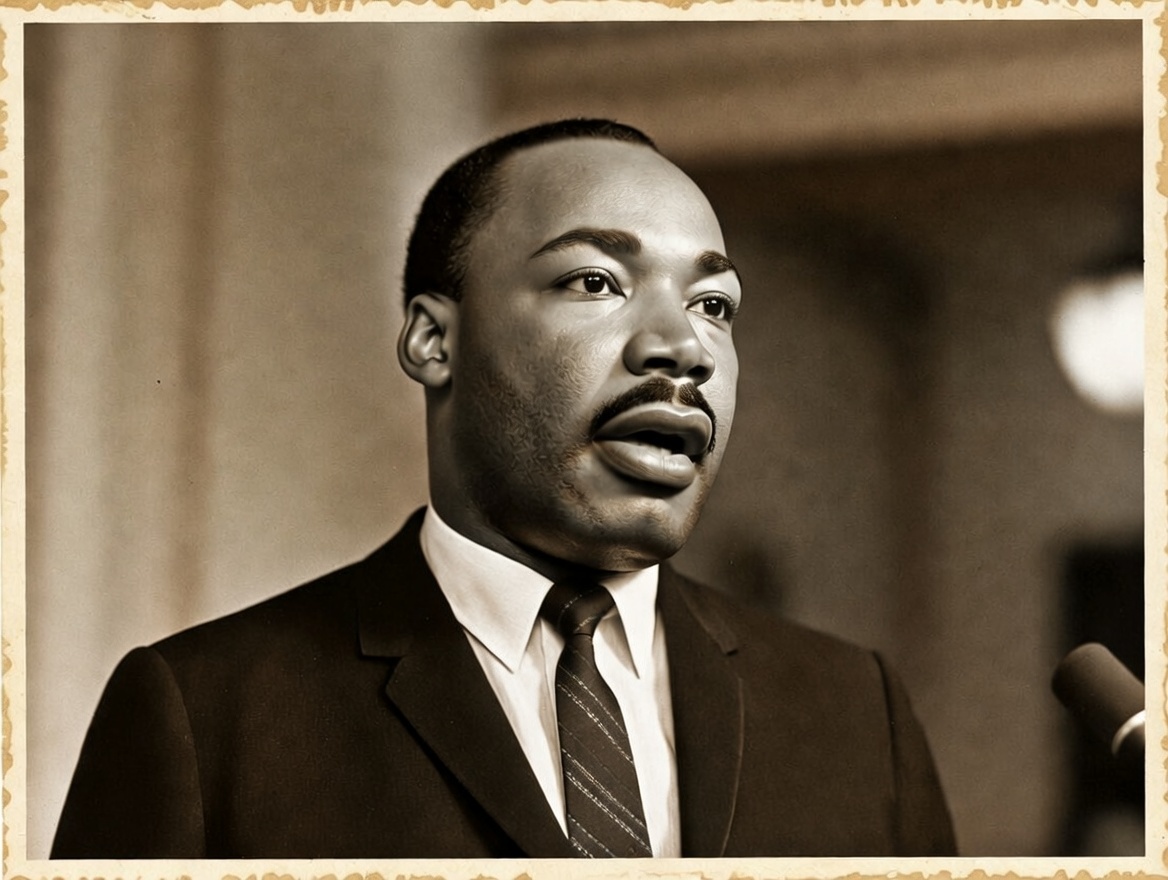
When we think of Dr. Martin Luther King Jr., the mind immediately drifts to the steps of the Lincoln Memorial, the echoes of "I Have a Dream," and the sweeping tide of the Civil Rights Movement. But behind the icon was a man of surprising hobbies, a "Michael" who became a "Martin," and a scholar who once earned a 'C' in public speaking.
For the readers of Triviaah.com, we’ve unburied the most fascinating layers of Dr. King’s journey—from his days as a 15-year-old college freshman to the night he spent his honeymoon in a funeral home.
1. The Name Change: From Michael to Martin
One of the most common trivia questions about MLK is his birth name. He was actually born Michael King Jr. on January 15, 1929. His father, Michael King Sr., was a prominent pastor at Ebenezer Baptist Church in Atlanta.
The change happened in 1934 when King Sr. traveled to Germany for a meeting of the Baptist World Alliance. While there, he became deeply inspired by the story of Martin Luther, the 16th-century German monk who sparked the Protestant Reformation. Upon returning to the States, the elder King changed both his name and his 5-year-old son’s name to Martin Luther King.
Trivia Tip: Despite the legal change, some members of the King family continued to call him "Mike" for the rest of his life.
2. A Prodigy in the Classroom
While most of us were navigating the awkwardness of middle school, Martin Luther King Jr. was already on a fast track to higher education. He was a gifted student who skipped both the 9th and 12th grades.
At the age of only 15, he was admitted to Morehouse College, a prestigious historically Black college in Atlanta. He followed in the footsteps of his father and maternal grandfather, both of whom were Morehouse alumni. Interestingly, King initially didn’t want to be a minister; he considered careers in medicine and law before the college’s president, Dr. Benjamin Mays, persuaded him that the ministry could be a powerful tool for social change.
3. The "C" in Public Speaking
This is a favorite for trivia fans: arguably the greatest orator in American history wasn't always a natural. During his first year at Crozer Theological Seminary in Pennsylvania, King actually received a C grade in public speaking.
He eventually hit his stride, graduating as the valedictorian of his class in 1951. He went on to earn a Ph.D. in Systematic Theology from Boston University in 1955. It was this doctorate that gave him the title "Dr. King," though many people today mistake him for a medical doctor.
4. The 381-Day Protest: The Montgomery Bus Boycott
Most people know that Rosa Parks’ refusal to give up her seat sparked the Montgomery Bus Boycott in 1955. But the trivia lies in the duration and the leadership.
Duration: The boycott lasted 381 days.
The Result: It ended only after the Supreme Court ruled that segregated seating on public buses was unconstitutional.
The Leadership: King was only 26 years old when he was chosen to lead the Montgomery Improvement Association. He was a "newcomer" to town, which actually worked in his favor because he hadn’t yet made enemies among the city’s competing factions.
5. A Honeymoon in a Funeral Home
When Martin married Coretta Scott on June 18, 1953, the couple faced the very reality they were fighting to change. In the segregated South, many hotels refused to host Black guests. As a result, the world’s most famous civil rights couple spent their wedding night in a funeral home owned by a friend, as it was one of the few places they could stay safely and comfortably.
6. The "I Have a Dream" Improvisation
The speech delivered on August 28, 1963, at the March on Washington is a masterpiece of rhetoric. But did you know the most famous part—the "Dream" section—wasn't in the original script?
King had used the "Dream" metaphor in previous speeches, but his advisors told him it was cliché and to leave it out for the Washington address. As he was speaking to the crowd of 250,000 people, the legendary gospel singer Mahalia Jackson shouted from behind him, "Tell them about the dream, Martin!" King paused, set his prepared notes aside, and began the improvised sequence that changed the world.
7. The Star Trek Connection
In a bizarre crossover of civil rights and sci-fi trivia, MLK was a huge fan of the original Star Trek series. It was the only show he allowed his children to stay up late to watch because it showed a future where people of all races lived and worked together as equals.
When actress Nichelle Nichols (who played Lt. Uhura) considered leaving the show to pursue a career on Broadway, she met King at a fundraiser. He begged her not to quit, telling her:
"You cannot leave. You are part of history. For the first time on television, we are being seen as we should be seen every day, as intelligent, quality, beautiful people... who can go into space."
Because of his encouragement, Nichols stayed on the show, eventually participating in the first interracial kiss in American television history.
8. A Prolific Arrest Record
Dr. King was a practitioner of "civil disobedience," which often resulted in him being behind bars. Over the course of his activism, he was arrested 29 times.
Most of these arrests were for minor charges intended to harass him—such as "driving 30 mph in a 25 mph zone" or "loitering." His most famous stint in jail produced the "Letter from Birmingham Jail," which he actually wrote on the margins of newspapers and scraps of toilet paper because he was initially denied writing paper.
9. The Youngest Nobel Laureate (at the time)
In 1964, at age 35, Martin Luther King Jr. became the youngest person to ever receive the Nobel Peace Prize. He held this record for decades until it was broken by Malala Yousafzai in 2014.
True to his mission, King didn't keep a penny of the prize money. He donated the entire $54,123 (which would be over $500,000 today) to the Civil Rights Movement.
10. The 1958 Assassination Attempt
Most people know Dr. King was tragically assassinated in 1968. However, he nearly died a decade earlier.
On September 20, 1958, while signing copies of his book Stride Toward Freedom in Harlem, a woman named Izola Ware Curry approached him and plunged a seven-inch letter opener into his chest. The tip of the blade rested against his aorta. Surgeons told him that if he had so much as sneezed, he would have died instantly.
Years later, in his final "Mountaintop" speech, he mentioned he was "glad he didn't sneeze," because he would have missed the landmark events of the 1960s.
11. Key Statistics and Quick Facts
For your trivia tables, here is a quick breakdown of the numbers that defined his life:
Category | Detail |
Birth Date | January 15, 1929 |
Death Date | April 4, 1968 Advertisement Loading Ad... |
Hometown | Atlanta, Georgia |
Favorite Hobby | Playing Pool (Billiards) |
Children | 4 (Yolanda, Martin III, Dexter, Bernice) |
Miles Traveled | Over 6 million miles for civil rights |
Speeches Given | Over 2,500 |
Grammy Awards | 1 (Best Spoken Word Album, 1971 - Posthumous) |
12. The Grammy Winner
Yes, Dr. King is a Grammy winner! While he wasn’t a singer (though he did love gospel music and played a little piano), he was awarded a Grammy posthumously in 1971 for Best Spoken Word Recording. The award was for his speech "Why I Oppose the War in Vietnam."
13. The Last Night: The "Mountaintop" Speech
The night before he was killed, King gave a hauntingly prophetic speech at Mason Temple in Memphis. He was there to support striking sanitation workers. In the speech, he said:
"I've been to the mountaintop... and I've seen the Promised Land. I may not get there with you. But I want you to know tonight, that we, as a people, will get to the Promised Land."
He was assassinated the following evening, April 4, 1968, on the balcony of the Lorraine Motel.
14. The Holiday That Took 15 Years
Creating a federal holiday for Dr. King was a massive struggle.
The Petition: Musician Stevie Wonder helped lead the charge, even writing the song "Happy Birthday" specifically to lobby for the holiday.
The Signing: President Ronald Reagan signed the holiday into law in 1983.
The First Observance: It was first observed in 1986.
The Holdouts: It wasn't until the year 2000 that all 50 states officially recognized MLK Day. South Carolina was the last state to make it a paid holiday for all state employees.
15. The King and the Movie Star
Here is a deep-cut trivia fact for your "Celebrity Connections" section: The King family actually paid the hospital bill for the birth of actress Julia Roberts.
Julia’s parents ran a theater school in Atlanta, and they were one of the few schools that would accept the King children. When Julia was born in 1967 and her parents couldn't afford the bill, Coretta and Martin paid it as a thank-you for their kindness.
16. The "Big Six"
Dr. King was part of what was known as the "Big Six"—the leaders of the six prominent civil rights organizations that organized the March on Washington.
Martin Luther King Jr. (SCLC)
James Farmer (CORE)
John Lewis (SNCC)
A. Philip Randolph (Brotherhood of Sleeping Car Porters)
Roy Wilkins (NAACP)
Whitney Young (National Urban League)
17. The Memorial: Stone of Hope
If you visit the MLK Memorial in Washington D.C. today, you’ll see him emerging from a massive block of granite. This design is a literal interpretation of a line from his "I Have a Dream" speech: "Out of the mountain of despair, a stone of hope."
Final Thoughts
Dr. King’s life was a masterclass in resilience, but for trivia fans, it’s the human details—the "C" in speech class, the love for Star Trek, and the name change—that make him feel real. He wasn't just a statue; he was a man who enjoyed a game of pool and skipped grades to change the world.
Whether you're hosting a pub quiz or building a history module, these facts ensure that your audience sees the full picture of the man who dared to dream.
If you liked this article and is a history buff, try our history quizzes or our history puzzles