History of Iran
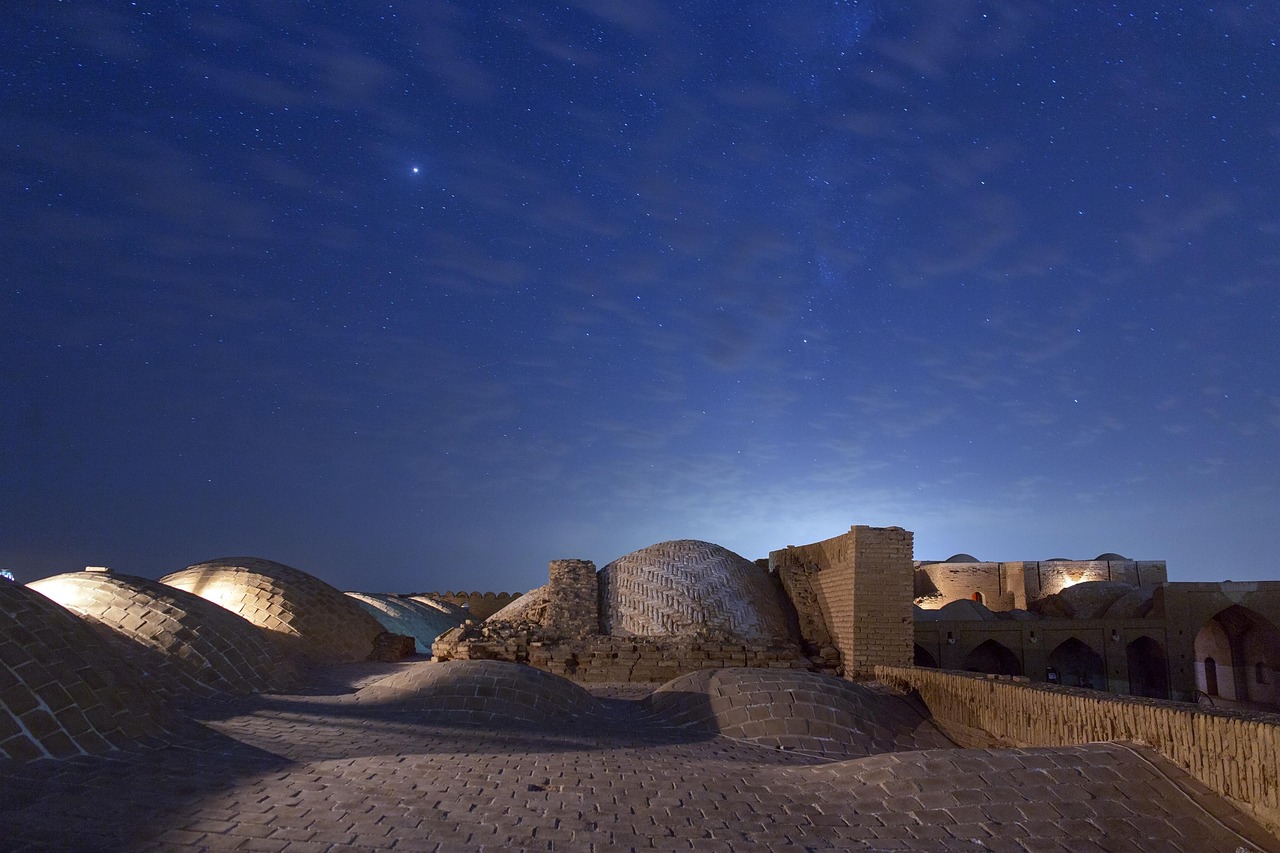
From Persia to Iran: a 5,000‑year journey through power, faith and identityFew nations can claim a historical lineage as deep and as turbulent as Iran. From the world’s first great empires to a revolutionary Islamic republic, its story is one of astonishing endurance—a civilisation that has been invaded, conquered and reborn more times than almost any other.
Land of the first cities
Long before the first Persian emperor raised his standard, the Iranian plateau was home to some of the world’s earliest urban settlements. By 4000 BC, sophisticated towns had appeared in the south‑west, while the Elamite civilisation emerged in the third millennium, centred on the great city of Susa. It was here, in the crucible of the ancient Near East, that Iran’s long‑distance journey toward empire first began.
The Medes and the birth of Iran
The arrival of Iranian tribes from the Central Asian steppes in the second millennium BC transformed the region. By the first millennium BC, two distinct Iranian peoples had risen to prominence: the Medes in the north and the Persians in the south. In 625 BC, the Medes unified Iran as a single nation and established the first Iranian empire. For a brief moment, the scattered tribes of the plateau became a single political entity.
Cyrus the Great and the Achaemenid miracle
The world’s first superpower was forged by a man of extraordinary vision. In 559 BC, Cyrus II – better known as Cyrus the Great – inherited the small kingdom of Persis and began a conquest that would change history. Within a generation, he had toppled the Median empire, subdued the rich kingdom of Lydia and captured the legendary city of Babylon.Cyrus’s empire stretched from the Balkans to Central Asia, becoming the largest contiguous land empire the world had yet seen. But his greatness rested on more than military might. His famous cylinder, often called the first charter of human rights, proclaimed religious tolerance and the return of deported peoples to their homelands. “Tolerance, law, and order,” as one historian put it, “were how the Persians were to conquer and rule the known world”.Under Darius the Great, the Achaemenid empire reached its greatest extent, governing tens of millions of subjects across three continents. A network of royal roads, a sophisticated postal system and an efficient bureaucracy held the empire together. At its ceremonial heart stood Persepolis, a dazzling complex of palaces and reliefs that proclaimed the power and legitimacy of the king of kings.Yet the Achaemenids’ ambition eventually overreached. Two failed invasions of Greece weakened the empire, and in 330 BC, Alexander the Great swept through Persia, burning Persepolis and extinguishing the dynasty that had ruled for over two centuries.
The Parthian interlude
For nearly five centuries after Alexander, Iran was ruled by the Parthians – a dynasty that emerged from the north‑east and reshaped Iranian identity. The Parthians were decentralised, with the king acting as a first among equals, ruling over a patchwork of semi‑independent vassals. This looseness proved a surprising strength. The Parthian empire lasted nearly 500 years – longer than any other Iranian dynasty – and became Rome’s most formidable eastern enemy.At Carrhae in 53 BC, a smaller Parthian force of horse archers annihilated a Roman army led by Crassus, killing two‑thirds of his legions and capturing the golden eagles of his legions. For centuries, the Parthians held the line against Rome, controlling the Silk Road trade that enriched their realm and connected East and West.
The Sasanian renaissance
In 224 AD, a new dynasty rose from the heartland of Persis. The Sasanians were proudly Persian, consciously reviving the glories of the Achaemenids. They carved monumental reliefs at Naqsh‑e Rostam, beside the tombs of their ancient forebears, and made Zoroastrianism the official state faith.The Sasanian empire was more centralised and bureaucratic than the Parthian. It became a byword for wealth and learning, famed for its libraries, its monumental art and its bustling cities. At its peak under Khusrau II, the Sasanian realm stretched from Anatolia to the Indus, and its armies briefly conquered Jerusalem and Alexandria. But the long wars with Byzantium exhausted both empires, leaving them vulnerable to a new force rising from the Arabian desert.
The Islamic conquest and the transformation of Persia
Between 633 and 651 AD, the armies of the Rashidun Caliphate swept through the Sasanian empire. The decisive battles of Qadisiyyah (636) and Nahavand (642) shattered Persian resistance, and the last Sasanian king fled east, dying in 651. Zoroastrianism, once the faith of emperors, was gradually displaced by Islam, though many Zoroastrians fled to India, where their descendants – the Parsis – thrive to this day.Yet Persia did not simply become Arab. The conquerors adopted many of the administrative practices of the empire they had overthrown, and Persian scholars, poets and bureaucrats shaped Islamic civilisation from within. Persian became the language of high culture across the Muslim world, and Iran remained a distinct cultural and political entity even under Arab rule.
The Safavid rebirth and the Shi‛a turn
After centuries of rule by foreign dynasties, the Safavids restored Iranian sovereignty in 1501 and deliberately forged a new national identity. Their great innovation was the imposition of Twelver Shi‛a Islam as the state religion, decisively separating Iran from its Sunni neighbours.Under Shah Abbas I, the Safavid empire reached its golden age. The capital, Isfahan, became one of the world’s most beautiful cities – “half the world,” as a contemporary proverb called it. The Safavids repulsed the Ottomans, built economic links with Europe and patronised art and architecture on a breathtaking scale. Their legacy is still visible in every corner of modern Iran, from the blue domes of Isfahan to the Shi‛a faith of the vast majority of Iranians.
The Qajar century of weakness
The fall of the Safavids in 1722 opened a period of chaos, but by 1794 the Qajar dynasty had reunified Iran. Their reign, which lasted until 1925, was defined by increasing weakness in the face of European imperialism. Russia and Britain carved away Iranian territory, and two disastrous wars with Russia cost Iran its Caucasian provinces forever.Imitating the constitutional movements they saw in the West, Iranian intellectuals, merchants and clerics forced the shah to accept a constitution and a parliament in 1906. But the new order was unstable, and foreign interference – particularly from Britain and Russia – continued to undermine Iranian sovereignty. The Qajars, increasingly seen as corrupt and ineffective, limped toward their end.
The Pahlavi gamble: forced modernisation
In 1921, a Cossack officer named Reza Khan seized power in a coup backed by the British. Four years later, he crowned himself Reza Shah Pahlavi, the founder of Iran’s last dynasty. Determined to drag his country into the modern world, he built railways, factories and schools, forced men to wear Western clothes, banned the veil for women and crushed tribal resistance. His brutal methods and contempt for democracy, however, bred deep resentment.Forced to abdicate by the British and Soviets in 1941, he was succeeded by his son, Mohammad Reza Pahlavi. The young shah initially appeared willing to share power, but after a CIA‑organised coup in 1953 toppled his popular, nationalist prime minister, he ruled as an increasingly autocratic monarch.The shah’s “White Revolution” of the 1960s redistributed land, gave women the vote and promoted literacy. It also enriched the royal family, repressed all political opposition through the hated secret police (SAVAK), and angered the Shi‛a clergy, who saw their influence collapsing. By the 1970s, oil wealth had made Iran a regional superpower, but beneath the surface, discontent was boiling over.
1979: the revolution that changed the world
In 1978, mass protests erupted across Iran. Secular leftists, students, merchants and conservative clerics – all united by hatred of the shah – poured into the streets. On 11 February 1979, the monarchy fell. The revolutionary coalition quickly fractured, and the clerics, led by Ayatollah Ruhollah Khomeini, seized total control. They imposed a strict Islamic republic, purged their former allies, and in November 1979, seized the US embassy, taking 52 Americans hostage for 444 days.
Iran since the revolution
The Islamic republic has endured for more than four decades, weathering a devastating war with Iraq, economic sanctions and periodic uprisings. Its revolution gave political voice to the devout poor and created a unique system of clerical rule that has no parallel anywhere else. But it has also suppressed dissent, restricted personal freedoms and isolated Iran from much of the world.
The eternal Iran
Through all the conquests and revolutions, something recognisably Iranian has survived. The Persian language, the Shi‛a faith, a deep pride in an ancient civilisation – these threads have held, even as empires rose and fell around them. From Cyrus’s cylinder to Khomeini’s fatwas, from the horse‑archers of Carrhae to the nuclear negotiators of Vienna, Iran remains one of history’s great survivors: a civilisation that has always refused to disappear.