Daily Geography Trivia Questions and Answers (With Explanations That Actually Teach You Something)
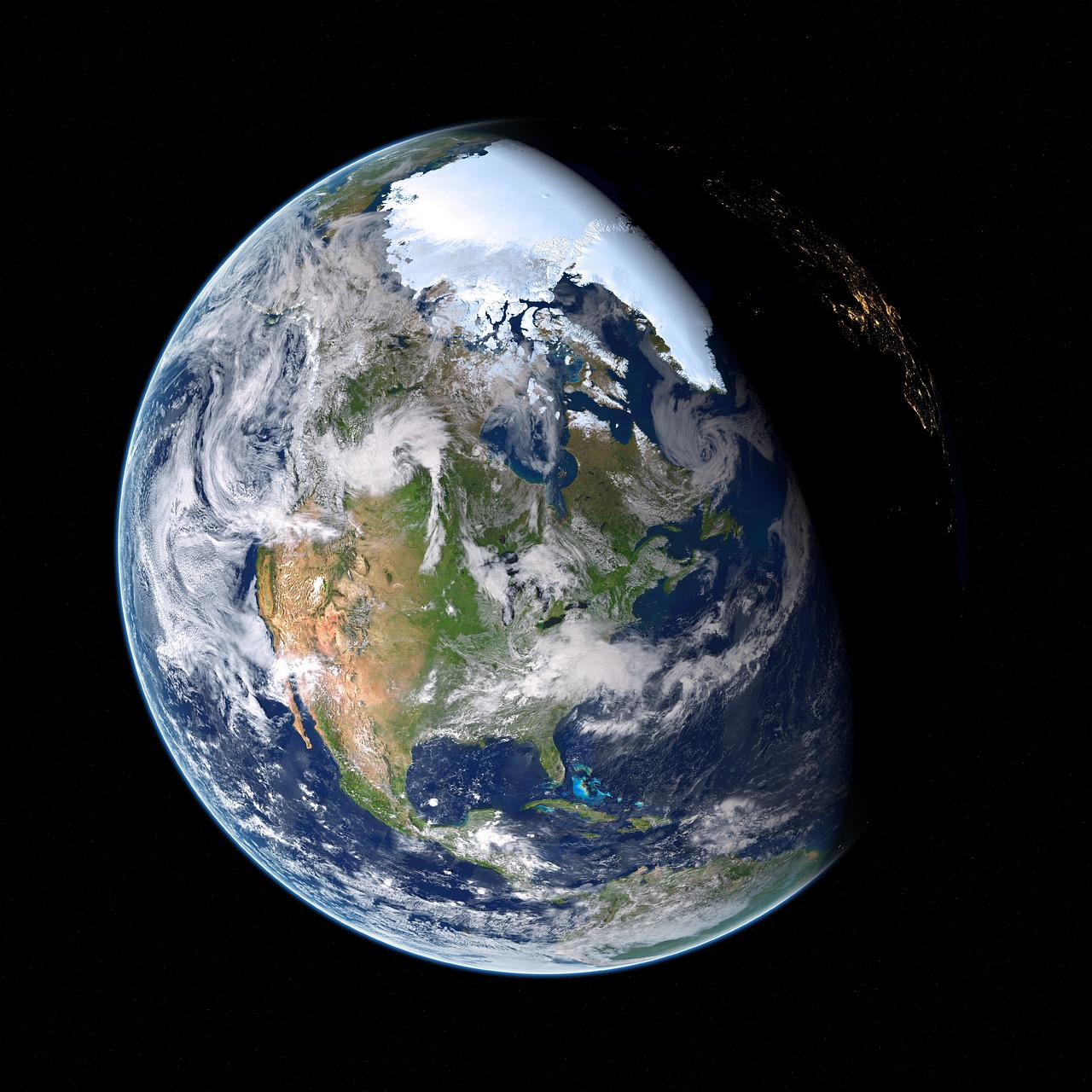
Geography is one of the trickiest categories in any trivia game. Everyone feels like they should know it — and then blanks on which country Lake Titicaca is in, or whether the Nile or the Amazon is longer. If you play our Daily Geography Trivia quiz, you already know the feeling.
This post does something most "geography facts" articles do not: it explains why the answers are what they are, so the knowledge actually sticks. Work through these 25 questions, check your answers, and you will walk into tomorrow's quiz with a genuine edge.
How to Use These Geography Trivia Questions
Read each question, think of your answer, then scroll to the explanation. Do not skip the explanations — they contain the context that makes facts memorable. A bare answer ("The Amazon") is forgotten in an hour. An explanation ("The Amazon carries more water than the next seven largest rivers combined, which is why it wins on volume even though the Nile is longer in distance") tends to stick for years.
At the end of each section there is a link to the corresponding daily quiz on Triviaah so you can test yourself with fresh questions right away.
Section 1: Capitals and Countries (Questions 1–5)
These are the questions that trip up even confident geography players. Capital cities are not always the largest or most famous cities in a country — and that gap is where trivia questions live.
Question 1: What is the capital of Australia?
A) Sydney B) Melbourne C) Canberra D) Brisbane
Answer: C — Canberra
Most people say Sydney. It is the largest city, the most internationally recognised, and home to the Opera House. But Canberra has been Australia's capital since 1913, and it was purpose-built specifically because Sydney and Melbourne could not agree on which of them should win the title. The Australian Capital Territory was carved out between both cities as a compromise — making Canberra one of the few national capitals that exists entirely because of a political argument between rival cities.
Question 2: Which country has the most official languages?
A) India B) South Africa C) Bolivia D) Papua New Guinea
Answer: B — South Africa, with 12 official languages
South Africa recognises Zulu, Xhosa, Afrikaans, English, Northern Sotho, Tswana, Sotho, Tsonga, Swati, Venda, Ndebele, and Sign Language as official languages. Bolivia has 37 recognised languages (though "official" status is debated), and India has 22 scheduled languages — but South Africa's constitutional recognition of 12 is the standard used in most trivia contexts. Worth memorising the number alongside the country.
Question 3: What is the smallest country in the world by area?
A) Monaco B) San Marino C) Vatican City D) Liechtenstein
Answer: C — Vatican City (0.44 km²)
Vatican City is an independent city-state enclosed within Rome. It covers less than half a square kilometre — smaller than many golf courses. Monaco is the second smallest at 2.02 km², which is why these two are consistently confused in trivia. The key distinction: Vatican City is a sovereign state recognised by the United Nations as a non-member observer, while Monaco is a full UN member state.
Question 4: Which African country was never colonised by a European power?
A) Ghana B) Ethiopia C) Senegal D) Kenya
Answer: B — Ethiopia
Ethiopia successfully repelled Italian forces at the Battle of Adwa in 1896 — one of the most significant military victories of any African nation against a European colonial power. Italy did occupy Ethiopia briefly between 1936 and 1941, but this is generally classified as an occupation rather than colonisation, and Ethiopia never became an official colony. Liberia is also sometimes cited as never being colonised, as it was founded by freed American slaves rather than annexed by a European state.
Question 5: The city of Istanbul spans two continents. Which two?
A) Europe and Asia B) Europe and Africa C) Asia and Africa D) Europe and the Middle East
Answer: A — Europe and Asia
The Bosphorus Strait, which runs through the heart of Istanbul, forms the boundary between Europe and Asia. The European side (historically called Thrace) contains the old city and most of the historic landmarks — the Hagia Sophia, Topkapi Palace, and the Grand Bazaar. The Asian side (Anatolia) is largely residential. Istanbul is the only city in the world that straddles two continents, which is why it appears in geography trivia so consistently.
🎯 Test yourself with today's fresh geography questions: Play the Daily Geography Trivia Quiz →
Section 2: Rivers, Mountains, and Physical Geography (Questions 6–10)
Physical geography questions are where confident players most often trip up. The facts feel like they should be straightforward — largest, longest, deepest — but the answers are frequently counterintuitive.
Question 6: Which is longer — the Nile or the Amazon?
A) The Nile B) The Amazon C) They are the same length D) It depends on the season
Answer: A — The Nile (by most measurements)
The Nile is approximately 6,650 km long; the Amazon is approximately 6,400 km. However, this is one of geography's most genuinely contested facts — a 2007 study claimed the Amazon is longer if measured from a more distant source, and the debate has not been fully settled. In trivia contexts, the standard accepted answer is the Nile. The Amazon wins on volume by an enormous margin — it discharges roughly 20% of all freshwater entering the world's oceans.
Question 7: Where is the world's highest waterfall?
A) Zimbabwe B) Venezuela C) Iceland D) Norway
Answer: B — Venezuela (Angel Falls)
Angel Falls, located in Venezuela's Canaima National Park, drops 979 metres — nearly 16 times the height of Niagara Falls. It was named after Jimmie Angel, an American aviator who flew over it in 1933 and became the first person to document the falls from the air. The local Indigenous name is Kerepakupai Merú, meaning "waterfall of the deepest place." Venezuela officially uses this name today. For trivia: Victoria Falls (Zimbabwe/Zambia) is the widest, not the tallest.
Question 8: Which ocean is the largest?
A) Atlantic B) Indian C) Pacific D) Arctic
Answer: C — The Pacific
The Pacific Ocean covers approximately 165 million km² — larger than all of Earth's land mass combined. It contains more than half of the world's oceanic water. The Pacific is also the deepest ocean; the Mariana Trench (located in the western Pacific) reaches a maximum depth of around 11,034 metres at the Challenger Deep. Worth remembering: Pacific (largest and deepest), Atlantic (second largest, saltiest on average), Indian (third largest, warmest).
Question 9: Mount Everest is the tallest mountain above sea level. Which mountain is tallest when measured from its base on the ocean floor?
A) K2 B) Mauna Kea C) Mont Blanc D) Kilimanjaro
Answer: B — Mauna Kea, Hawaii
Mauna Kea rises about 4,205 metres above sea level, which sounds modest compared to Everest's 8,849 metres. But Mauna Kea sits on the ocean floor — and when measured from its base at the bottom of the Pacific, its total height is approximately 10,210 metres, making it taller than Everest by over 1,300 metres. This is a classic trivia question that rewards knowing the difference between "tallest above sea level" and "tallest from base to peak."
Question 10: The Sahara is the world's largest hot desert. What is the world's largest cold desert?
A) Gobi B) Patagonian C) Antarctic D) Arctic
Answer: C — Antarctica
This trips up almost everyone. Antarctica qualifies as a desert because it receives very little precipitation — most of the continent receives less than 200mm of precipitation per year, making it technically drier than the Sahara. At 14.2 million km², Antarctica is the largest desert on Earth by area. The Sahara (8.5 million km²) is the largest hot desert. The Gobi in Central Asia is the fifth largest overall and the largest in Asia.
Section 3: Borders and Boundaries (Questions 11–15)
Border questions reward players who think about geography spatially rather than just memorising lists of capitals.
Question 11: How many countries does China border?
A) 10 B) 12 C) 14 D) 16
Answer: C — 14
China shares land borders with Russia, Mongolia, Kazakhstan, Kyrgyzstan, Tajikistan, Afghanistan, Pakistan, India, Nepal, Bhutan, Myanmar, Laos, Vietnam, and North Korea. This makes China one of the two countries with the most land borders in the world — Russia also borders 14 countries. Memorising this fact is useful beyond trivia: China's 14 border relationships are central to understanding East Asian geopolitics.
Question 12: Which country is completely surrounded by South Africa?
A) Swaziland (Eswatini) B) Lesotho C) Botswana D) Namibia
Answer: B — Lesotho
Lesotho is one of only three countries in the world that are completely surrounded (enclaved) by a single other country. The other two are Vatican City (surrounded by Italy) and San Marino (also surrounded by Italy). Eswatini (formerly Swaziland) borders both South Africa and Mozambique, so it is not a true enclave. Lesotho's complete enclosure within South Africa makes it a recurring favourite in geography trivia.
Question 13: What is the longest international border in the world?
A) USA–Mexico B) Russia–Kazakhstan C) USA–Canada D) China–Russia
Answer: C — USA–Canada (8,891 km)
The border between the United States and Canada is the longest international border in the world and is also the longest undefended border. It stretches from the Atlantic Ocean in the east to the Pacific in the west, plus the border between Alaska and Canada's Yukon. The Russia–Kazakhstan border (7,644 km) is the second longest. The USA–Mexico border (3,145 km) is often assumed to be the longest US border, but it is less than half the length of the US–Canada border.
Question 14: Which two countries share the most border crossings?
A) USA and Canada B) Germany and France C) India and Bangladesh D) USA and Mexico
Answer: A — USA and Canada
The USA and Canada share over 120 official border crossings. The longest undefended international border in the world has an extraordinary number of crossing points — from major crossings like Niagara Falls and the Ambassador Bridge in Windsor/Detroit, down to small rural checkpoints in Montana and Manitoba. This is distinct from "longest border" (which the USA–Canada also wins) and "most traffic" (which USA–Mexico wins by volume).
Question 15: Which country has the most islands?
A) Indonesia B) Philippines C) Sweden D) Canada
Answer: C — Sweden
This shocks most players. Sweden has approximately 221,800 islands, of which around 1,000 are inhabited. Canada comes second with around 52,455 islands. Indonesia — which most people instinctively choose — has around 17,000 islands and is third. The Scandinavian coastline's extremely complex fjord-and-skerry topography produces an extraordinary number of small island formations that accumulate into the world's highest count.
🎯 Ready for more? Play today's Geography Daily Quiz: Start the Quiz →
Section 4: Oceans, Seas, and Lakes (Questions 16–20)
Water-based geography questions are among the most reliably tricky in any trivia context — partly because "largest," "deepest," and "longest" apply to very different bodies of water.
Question 16: What is the world's largest lake by surface area?
A) Lake Superior B) Lake Baikal C) Caspian Sea D) Lake Victoria
Answer: C — The Caspian Sea (371,000 km²)
Technically a lake (it has no natural outlet to an ocean), the Caspian Sea dwarfs every other lake on Earth by surface area. Lake Superior is the largest freshwater lake by surface area at 82,000 km². Lake Baikal wins on volume and depth — it contains roughly 20% of the world's unfrozen surface fresh water and is the world's deepest lake at 1,642 metres. Lake Victoria is the largest lake in Africa and the second largest freshwater lake by surface area.
Question 17: The Dead Sea is the lowest point on Earth's land surface. In which country is most of it located?
A) Israel B) Palestine C) Jordan D) It is divided equally
Answer: C — Jordan
The Dead Sea borders Jordan to the east and Israel/Palestine to the west. The eastern (Jordanian) shore is considerably longer and contains more of the lake's total surface area. The Dead Sea sits at approximately 430 metres below sea level, making it the lowest exposed point on Earth's surface. Its extreme salinity (around 34%) means nothing lives in it — hence the name — and makes swimmers naturally buoyant.
Question 18: Which sea is the saltiest on Earth?
A) Red Sea B) Mediterranean Sea C) Dead Sea D) Caspian Sea
Answer: C — The Dead Sea (if included as a sea)
If we include the Dead Sea, it is by far the saltiest — roughly 34% salinity versus 3.5% for typical ocean water. Among seas connected to an ocean, the Red Sea is the saltiest at around 4.1% salinity. This high salinity occurs because the Red Sea has very little freshwater inflow, high evaporation rates, and limited circulation with the open ocean. The Mediterranean is second at roughly 3.8%. This question often hinges on how "sea" is defined — know both answers.
Question 19: Lake Titicaca is the world's highest navigable lake. Which two countries share it?
A) Chile and Bolivia B) Peru and Bolivia C) Peru and Chile D) Bolivia and Argentina
Answer: B — Peru and Bolivia
Lake Titicaca sits at 3,812 metres above sea level on the Andean Altiplano and is shared between Peru (60% of the surface) and Bolivia (40%). It is the largest lake in South America by volume and the highest navigable lake in the world — meaning ships can sail on it at that altitude. The Uros people have lived on floating reed islands on the lake for centuries. Bolivia's access to the lake is particularly significant as Bolivia is landlocked and uses the lake as a major waterway.
Question 20: Which strait separates Europe from Africa?
A) Strait of Hormuz B) Strait of Gibraltar C) Bosphorus Strait D) Strait of Malacca
Answer: B — Strait of Gibraltar
The Strait of Gibraltar is only about 14 km wide at its narrowest point, separating southern Spain from northern Morocco. It connects the Atlantic Ocean to the Mediterranean Sea and has been one of the most strategically important waterways in history. The Rock of Gibraltar (a British Overseas Territory) sits on the European side. The Bosphorus separates European and Asian Turkey. The Strait of Hormuz connects the Persian Gulf to the Gulf of Oman. The Strait of Malacca lies between Malaysia and Indonesia.
Section 5: Populations, Economies, and Record-Breakers (Questions 21–25)
These questions test whether you know geography beyond maps — the human and economic dimensions that define how countries relate to the world.
Question 21: Which country has the largest population?
A) China B) India C) USA D) Indonesia
Answer: B — India
India overtook China as the world's most populous country in 2023, reaching approximately 1.43 billion people. China's population has begun to decline due to the long-term effects of its one-child policy (in place from 1980 to 2015). India's population is significantly younger on average, meaning the gap is expected to widen for several decades before India's own growth rate slows.
Question 22: Which country is the world's largest by land area?
A) China B) USA C) Canada D) Russia
Answer: D — Russia (17.1 million km²)
Russia is almost twice the size of Canada (second largest at 10 million km²). Russia spans 11 time zones — more than any other country — and covers parts of both Europe and Asia. Despite its enormous size, much of Russia's territory (particularly Siberia) is sparsely inhabited. For comparison, the entire USA fits into Russia approximately 1.8 times.
Question 23: Which city has the highest elevation of any national capital in the world?
A) Quito, Ecuador B) Addis Ababa, Ethiopia C) Kathmandu, Nepal D) La Paz, Bolivia
Answer: D — La Paz, Bolivia (3,640 metres)
La Paz (officially Nuestra Señora de La Paz) sits at 3,640 metres above sea level, making it the highest seat of government in the world. Importantly, Bolivia has a constitutional capital — Sucre — which is lower at 2,810 metres. La Paz functions as the administrative capital and seat of government. Quito (2,850 metres) is the second highest official capital. Thimphu, Bhutan (2,334 metres) is also frequently cited but ranks lower than both.
Question 24: The Amazon rainforest covers parts of nine countries. Which country contains the largest share?
A) Colombia B) Peru C) Venezuela D) Brazil
Answer: D — Brazil (approximately 60%)
Brazil contains roughly 60% of the Amazon rainforest — about 3.3 million km² of the total 5.5 million km². The remaining 40% is spread across Peru, Colombia, Venezuela, Ecuador, Bolivia, Guyana, Suriname, and French Guiana. This is why Brazilian environmental policy has such outsized global significance: decisions about deforestation in Brazil affect the majority of the world's largest tropical rainforest, which produces roughly 20% of the world's oxygen.
Question 25: Which country has the most UNESCO World Heritage Sites?
A) France B) China C) Italy D) Spain
Answer: C — Italy (58 sites as of 2024)
Italy leads the UNESCO World Heritage list with 58 sites, followed by China (57) and Germany (52). France has 52 and Spain has 50. Italy's dominance reflects its extraordinary concentration of ancient Roman, Renaissance, and Baroque history across a relatively small country. Notable Italian UNESCO sites include the Historic Centre of Rome, Venice and its Lagoon, the Amalfi Coast, Pompeii, and the Cinque Terre. This ranking shifts slightly each year as new sites are inscribed.
How to Remember Geography Facts More Effectively
Most geography trivia knowledge is lost because people treat it as a list rather than a story. Three techniques that actually work:
Connect facts spatially. When you learn that Lesotho is surrounded by South Africa, immediately picture the map. Spatial memory is significantly more durable than verbal memory — the image of a small country completely inside a larger one is hard to forget once you have seen it.
Learn the "why" alongside the "what." Canberra was built because Sydney and Melbourne couldn't agree. The Dead Sea is the lowest point because it sits in the Jordan Rift Valley, a geological fault line. Explanations create memory hooks that bare facts do not.
Test yourself daily rather than reviewing. Reading these answers again tomorrow will not help as much as trying to recall them from memory. This is why a daily geography quiz — where you are forced to retrieve answers rather than recognise them — is one of the most effective ways to build lasting geographical knowledge.
Play Today's Daily Geography Quiz
These 25 questions cover permanent geography knowledge — the kind of facts that stay relevant in any quiz format. But the Daily Geography Trivia Quiz on Triviaah refreshes every 24 hours with new questions across capitals, physical geography, borders, and world records.
Play it today, come back tomorrow, and within a few weeks you will notice a genuine improvement in your geography recall — not just in trivia games, but in how you understand and discuss the world.
Play the Daily Geography Quiz Now →
Also worth trying: our full Daily Trivia collection covers history, science, sports, entertainment, arts, and literature — 10 fresh questions per category, every day, free.